Answer: N has no available d orbitals to expand beyond octet; P uses 3d orbitals.
- A N has no available d orbitals to expand beyond octet; P uses 3d orbitals
- B Nitrogen is less electronegative than phosphorus in the majority of cases studied
- C Phosphorus has a higher first ionisation energy than nitrogen as widely reported
- D Nitrogen behaves as a metal rather than a non-metal in standard practice
Correct answer: A. N has no available d orbitals to expand beyond octet; P uses 3d orbitals
Explanation: Nitrogen is in period 2 (2s and 2p only, no d orbitals); phosphorus is in period 3 and can use 3d orbitals for expanded octet.
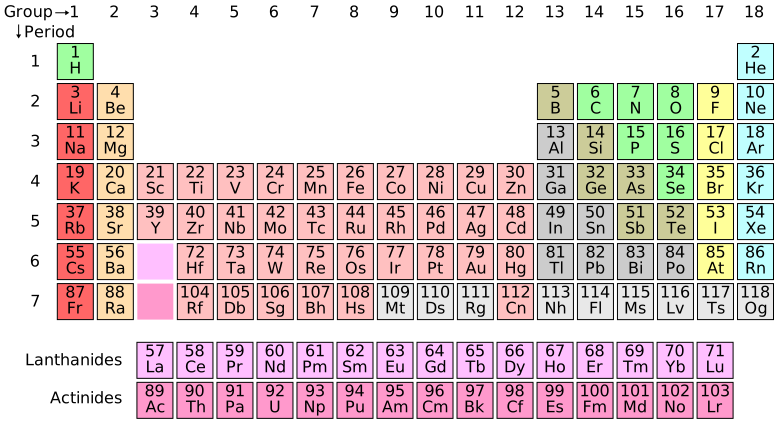
The complete modern periodic table (118 elements). Image: Cepheus et al., Public Domain, via Wikimedia Commons.
Concept context
The periodic table organises all 118 elements by atomic number and similar properties. Study periodic trends like atomic radius, ionization energy, and electronegativity, and learn how an element's position predicts its behaviour.
Read the full Classification of Elements and Periodicity in Properties notes →