Answer: It can lose one electron like alkali metals (1s 1 ) but also gain one like halogens (1s 2 ).
- A It can lose one electron like alkali metals (1s<sup>1</sup>) but also gain one like halogens (1s<sup>2</sup>)
- B It exists as a diatomic gas under ordinary atmospheric conditions like the halogens
- C Its most abundant isotope, protium, contains no neutron in its nucleus in general practice
- D It is generally the lightest and smallest element found on the entire periodic table
Correct answer: A. It can lose one electron like alkali metals (1s<sup>1</sup>) but also gain one like halogens (1s<sup>2</sup>)
Explanation: Hydrogen can form H+ (like alkali metals) or H- (like halogens), making its placement in Group 1 or Group 17 debatable.
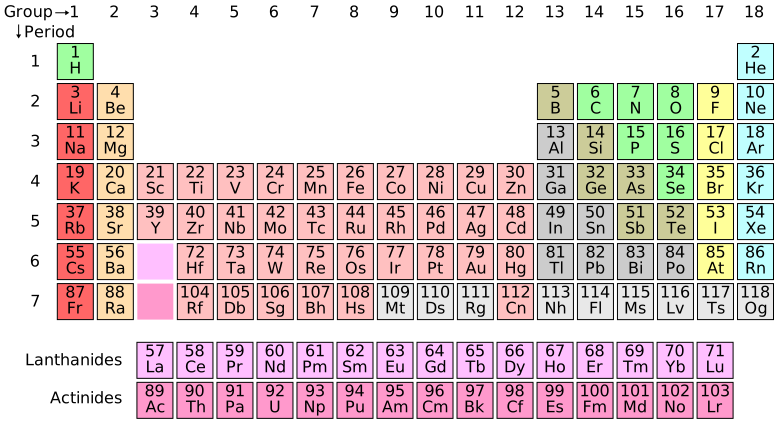
The complete modern periodic table (118 elements). Image: Cepheus et al., Public Domain, via Wikimedia Commons.
Concept context
The periodic table organises all 118 elements by atomic number and similar properties. Study periodic trends like atomic radius, ionization energy, and electronegativity, and learn how an element's position predicts its behaviour.
Read the full Classification of Elements and Periodicity in Properties notes →