Answer: It represents the distance in non-bonded contact (weak attraction), while covalent radius is within a bond.
- A It represents the distance in non-bonded contact (weak attraction), while covalent radius is within a bond
- B The two radii are conventionally reported using largely different units of measurement in most cases
- C The comparison is actually being made between two chemically different elements under typical conditions
- D The two radii are generally measured at very different experimental temperatures according to standard textbooks
Correct answer: A. It represents the distance in non-bonded contact (weak attraction), while covalent radius is within a bond
Explanation: Covalent radius = half the internuclear distance in a homonuclear bond; van der Waals radius = half the distance in non-bonded contact, which is always larger.
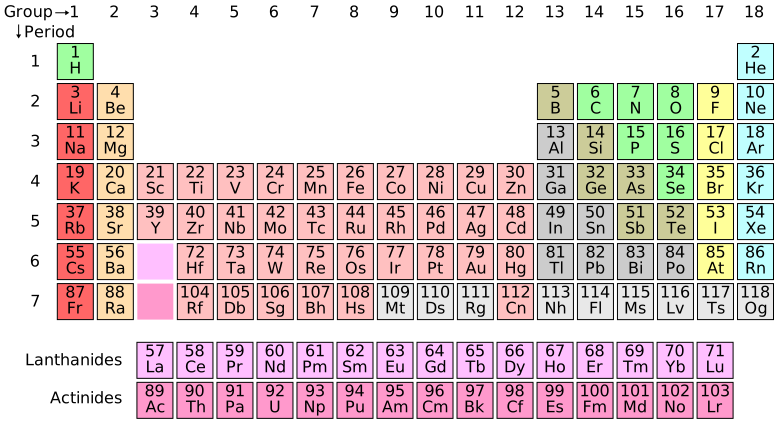
The complete modern periodic table (118 elements). Image: Cepheus et al., Public Domain, via Wikimedia Commons.
Concept context
The periodic table organises all 118 elements by atomic number and similar properties. Study periodic trends like atomic radius, ionization energy, and electronegativity, and learn how an element's position predicts its behaviour.
Read the full Classification of Elements and Periodicity in Properties notes →