Answer: Adding an electron to O- (a negative ion) requires energy to overcome repulsion.
- A Adding an electron to O- (a negative ion) requires energy to overcome repulsion
- B Oxygen's atomic radius is generally too small to accept another electron in typical laboratory settings
- C Oxygen has an unusually low electronegativity for its period under usual circumstances
- D The process instead forms an unstable O<sup>3-</sup> trianion intermediate according to most researchers
Correct answer: A. Adding an electron to O- (a negative ion) requires energy to overcome repulsion
Explanation: The first EA is exothermic (neutral O gains e-), but the second EA is endothermic because adding e- to an already negative O- requires overcoming electrostatic repulsion.
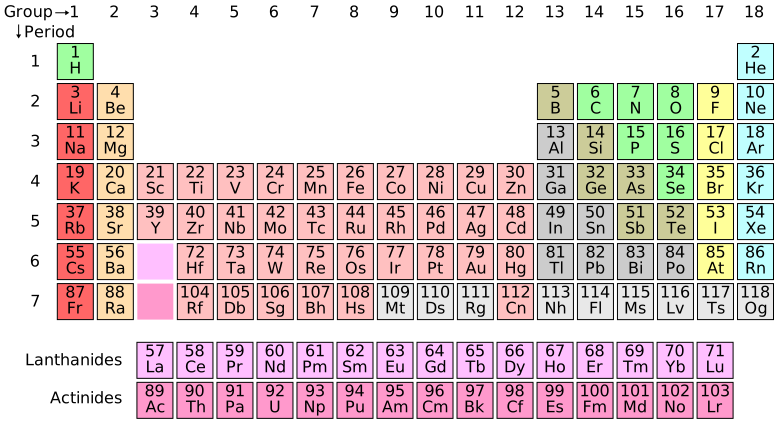
The complete modern periodic table (118 elements). Image: Cepheus et al., Public Domain, via Wikimedia Commons.
Concept context
The periodic table organises all 118 elements by atomic number and similar properties. Study periodic trends like atomic radius, ionization energy, and electronegativity, and learn how an element's position predicts its behaviour.
Read the full Classification of Elements and Periodicity in Properties notes →