Answer: n+l rule: subshell with lower n+l fills first; if equal, lower n fills first.
- A n+l rule: subshell with lower n+l fills first; if equal, lower n fills first
- B A simple rule that the lowest n value always fills first regardless of l
- C Shielding provided specifically by the 4s electrons pushes 3d lower
- D Unpredictable quantum fluctuations that vary by element
Correct answer: A. n+l rule: subshell with lower n+l fills first; if equal, lower n fills first
Explanation: The Aufbau principle uses the (n+l) rule: 4s (n+l=4) fills before 3d (n+l=5). After filling, 3d is lower in energy than 4s in transition metal ions.
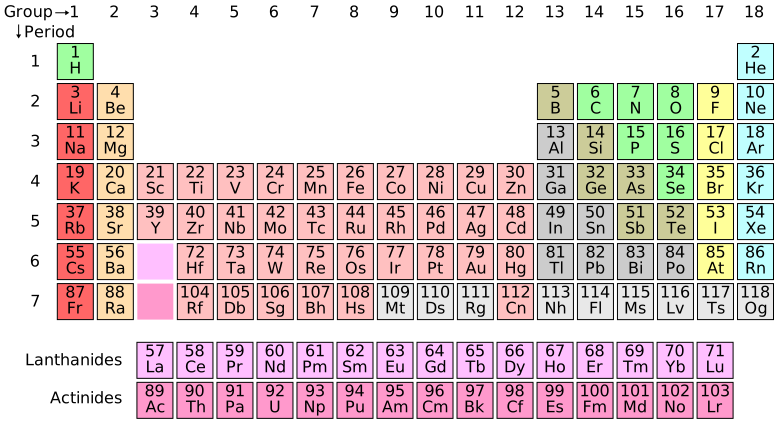
The complete modern periodic table (118 elements). Image: Cepheus et al., Public Domain, via Wikimedia Commons.
Concept context
The periodic table organises all 118 elements by atomic number and similar properties. Study periodic trends like atomic radius, ionization energy, and electronegativity, and learn how an element's position predicts its behaviour.
Read the full Classification of Elements and Periodicity in Properties notes →