Answer: It did not work for elements beyond calcium and did not account for undiscovered elements.
- A It did not work for elements beyond calcium and did not account for undiscovered elements
- B It used the atomic mass values of the elements incorrectly under most conditions encountered
- C It largely ignored the existence of isotopes of each element as frequently observed in practice
- D It deliberately placed metals and non-metals in the same octave group in many documented cases
Correct answer: A. It did not work for elements beyond calcium and did not account for undiscovered elements
Explanation: Newlands' octaves broke down after calcium; he also placed two elements in the same position, and the law did not predict new elements.
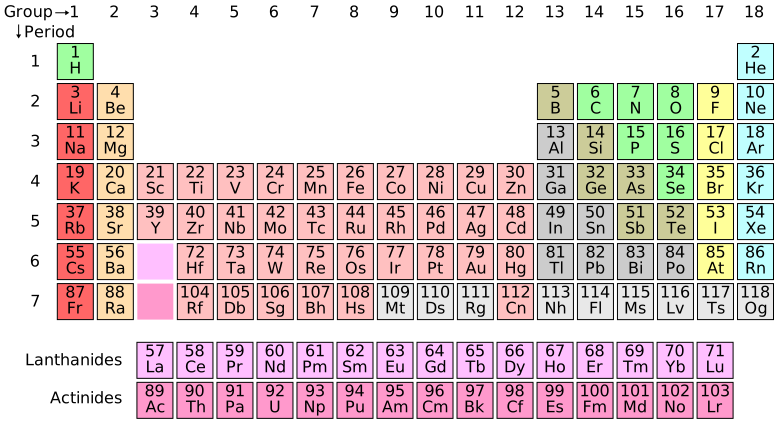
The complete modern periodic table (118 elements). Image: Cepheus et al., Public Domain, via Wikimedia Commons.
Concept context
The periodic table organises all 118 elements by atomic number and similar properties. Study periodic trends like atomic radius, ionization energy, and electronegativity, and learn how an element's position predicts its behaviour.
Read the full Classification of Elements and Periodicity in Properties notes →