Answer: Electron is removed from a positive ion with higher nuclear charge attraction.
- A Electron is removed from a positive ion with higher nuclear charge attraction
- B The electron configuration rearranges into a higher-energy state in routine practice
- C The surrounding temperature rises during ionisation overall in most cases
- D The resulting ion becomes larger than the neutral atom under typical conditions
Correct answer: A. Electron is removed from a positive ion with higher nuclear charge attraction
Explanation: After losing the first electron, the remaining electrons experience greater effective nuclear charge, so more energy is needed.
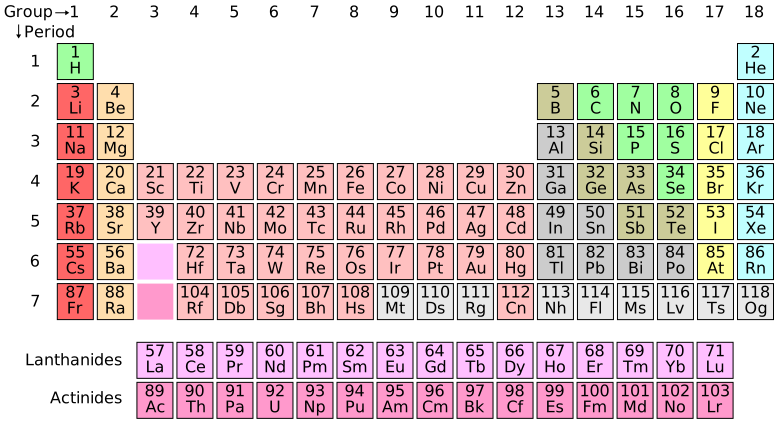
The complete modern periodic table (118 elements). Image: Cepheus et al., Public Domain, via Wikimedia Commons.
Concept context
The periodic table organises all 118 elements by atomic number and similar properties. Study periodic trends like atomic radius, ionization energy, and electronegativity, and learn how an element's position predicts its behaviour.
Read the full Classification of Elements and Periodicity in Properties notes →