Answer: Bond energy data (extra ionic resonance energy).
- A Bond energy data (extra ionic resonance energy)
- B Ionisation energy values alone, without bond energy data
- C Electron affinity values alone, without bond energy data
- D Atomic radius measurements alone, without bond energy data
Correct answer: A. Bond energy data (extra ionic resonance energy)
Explanation: Pauling defined electronegativity using the extra bond energy above the geometric mean of homonuclear bond energies (ionic resonance).
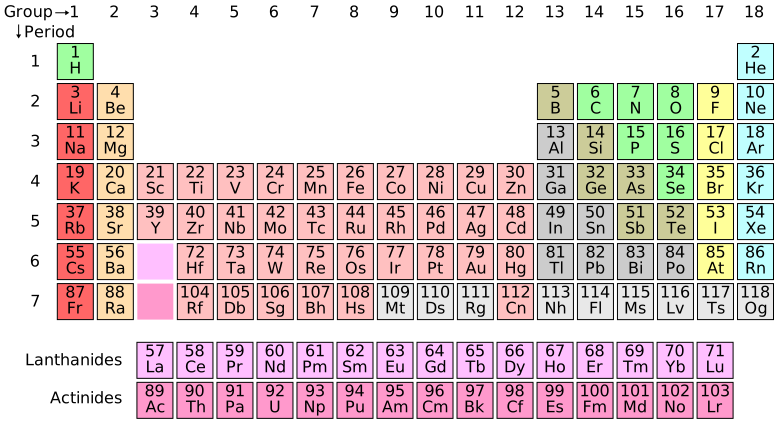
The complete modern periodic table (118 elements). Image: Cepheus et al., Public Domain, via Wikimedia Commons.
Concept context
The periodic table organises all 118 elements by atomic number and similar properties. Study periodic trends like atomic radius, ionization energy, and electronegativity, and learn how an element's position predicts its behaviour.
Read the full Classification of Elements and Periodicity in Properties notes →