Answer: Its very small size giving high charge density and polarising power.
- A Its very small size giving high charge density and polarising power
- B Its position as the most reactive metal in Group 1
- C Its unusually low melting point relative to the other alkali metals
- D Its comparatively low first ionisation energy among Group 1 metals
Correct answer: A. Its very small size giving high charge density and polarising power
Explanation: Lithium's tiny ionic radius gives it a very high charge/radius ratio, causing it to behave more like Mg (diagonal relationship).
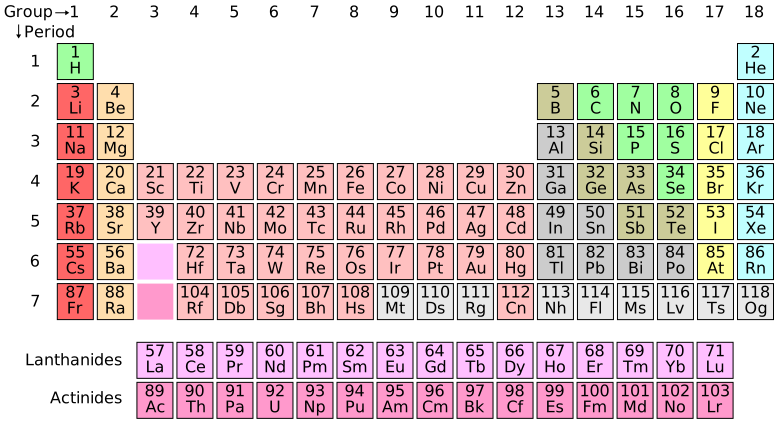
The complete modern periodic table (118 elements). Image: Cepheus et al., Public Domain, via Wikimedia Commons.
Concept context
The periodic table organises all 118 elements by atomic number and similar properties. Study periodic trends like atomic radius, ionization energy, and electronegativity, and learn how an element's position predicts its behaviour.
Read the full Classification of Elements and Periodicity in Properties notes →