Answer: Non-zero (chromatic effect remains).
- A Also zero in typical laboratory settings
- B Non-zero (chromatic effect remains)
- C Equal to deviation of each under usual circumstances
- D Depends on glass type according to most researchers
Correct answer: B. Non-zero (chromatic effect remains)
Explanation: A direct-vision prism: zero net deviation for mean wavelength but non-zero dispersion (chromatic aberration). Dispersion is not zero.
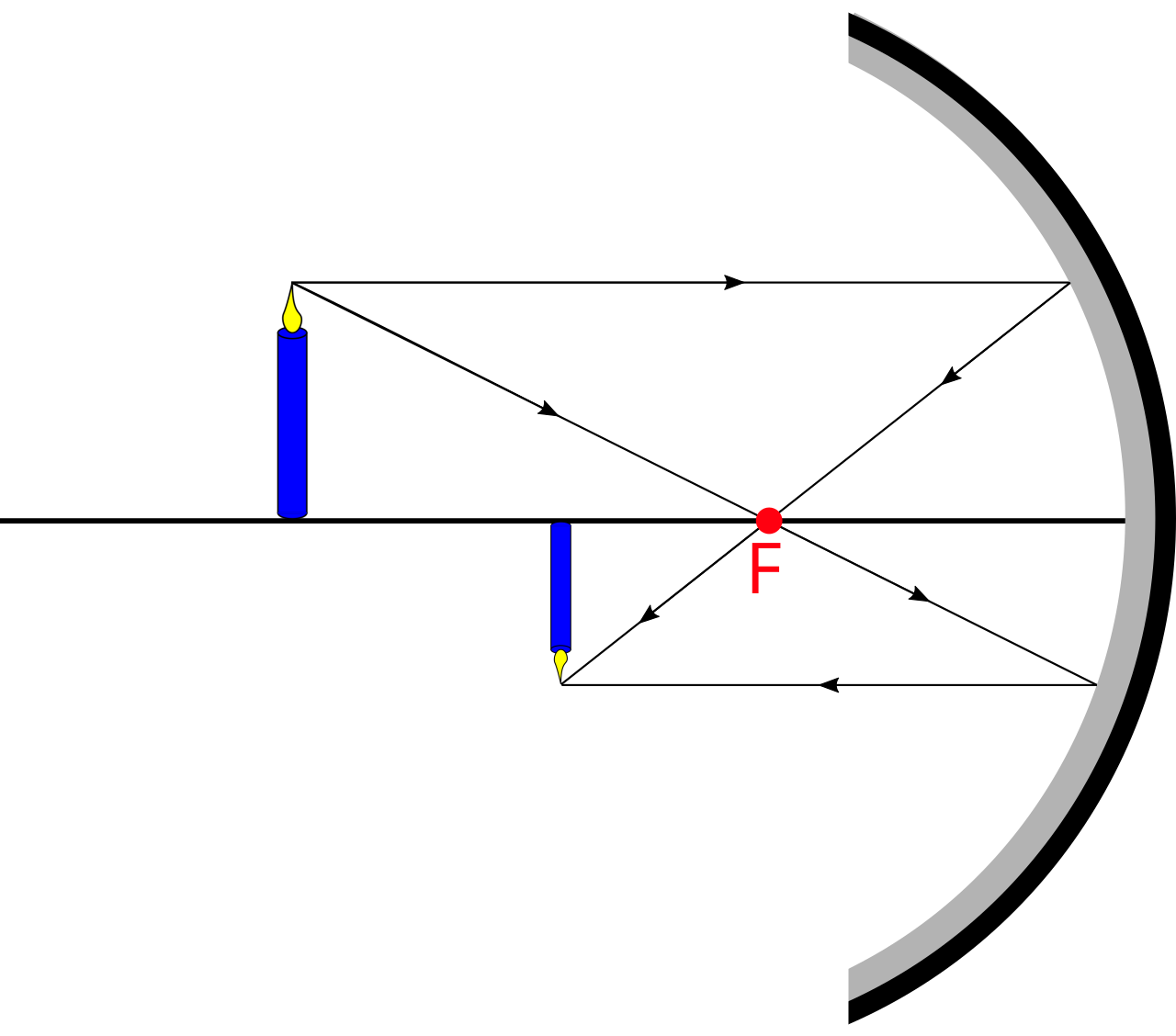
Concave mirror ray construction: a ray parallel to the axis reflects through F, and a ray through F reflects parallel, locating the inverted real image. Image: Maxmath12, CC0, via Wikimedia Commons.
Concept context
Reflection, refraction, lenses, mirrors, total internal reflection.