Answer: Fast block (membrane depolarization) within seconds + slow block (cortical reaction releases enzymes that harden zona pellucida).
- A Generally just one sperm cell is physically released from the testes during each reproductive cycle as frequently described
- B Fast block (membrane depolarization) within seconds + slow block (cortical reaction releases enzymes that harden zona pellucida)
- C The cervix mechanically filters out most sperm cells, generally allowing mainly a small number through each cycle in most textbook accounts
- D Generally the fastest-swimming sperm cell present is most able to physically reach the egg first during normal conditions as generally observed
Correct answer: B. Fast block (membrane depolarization) within seconds + slow block (cortical reaction releases enzymes that harden zona pellucida)
Explanation: Two mechanisms: (1) Fast block: membrane depolarization within 3 seconds of sperm entry makes membrane transiently repolarized. (2) Slow block: cortical granules fuse with plasma membrane, releasing enzymes into perivitelline space that harden the zona pellucida (zona reaction) within 1-2 minutes, permanently blocking further sperm entry.
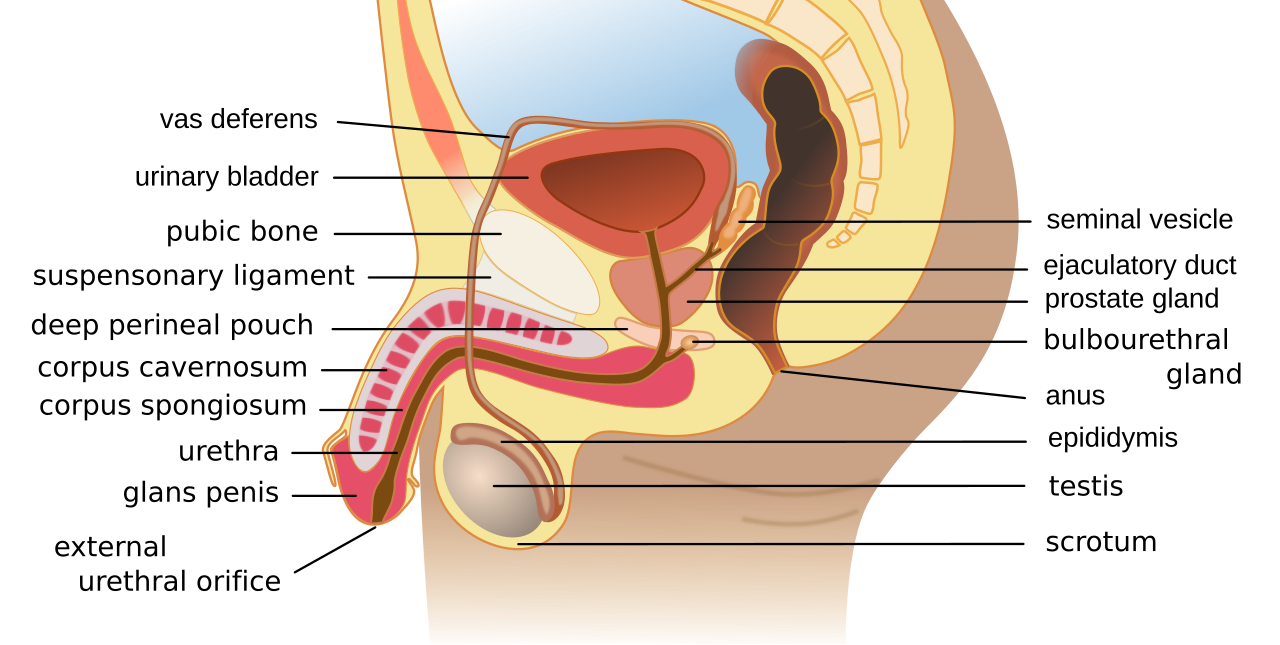
The human male reproductive system: sperm formed in the testis mature in the epididymis and travel via the vas deferens, mixing with secretions of the seminal vesicle, prostate and bulbourethral glands. Image: Wumingbai, CC BY-SA 4.0, via Wikimedia Commons.
Concept context
Male and female reproductive systems, gametogenesis, fertilization, implantation, pregnancy, and reproductive health.