Answer: Colostrum (first breast milk secreted 2-3 days postpartum) is rich in IgA (secretory), IgG, lactoferrin, lysozyme, and immune cells; provides passive mucosal immunity to newborn whose immune system is immature.
- A Colostrum is sometimes thought to have little immune function and instead serves a mainly nutritional role for the newborn infant in most cases as frequently observed in practice in many documented cases
- B Colostrum (first breast milk secreted 2-3 days postpartum) is rich in IgA (secretory), IgG, lactoferrin, lysozyme, and immune cells; provides passive mucosal immunity to newborn whose immune system is immature
- C Colostrum is sometimes thought to provide mainly basic caloric nutrition to the infant, largely lacking any immune-related protective components according to conventional understanding in routine practice
- D Colostrum is sometimes thought to provide mainly IgM class antibodies to the newborn infant, with few other immune-related factors present overall in most cases under typical conditions according to standard textbooks
Correct answer: B. Colostrum (first breast milk secreted 2-3 days postpartum) is rich in IgA (secretory), IgG, lactoferrin, lysozyme, and immune cells; provides passive mucosal immunity to newborn whose immune system is immature
Explanation: Colostrum is the first secretion (days 1-3) with high protein, immunoglobulins (especially sIgA), growth factors. sIgA coats the neonatal gut, protecting against pathogens and preventing gut infections. IgG provides systemic passive immunity. Lactoferrin (antimicrobial), leukocytes, cytokines further protect. Breastfeeding reduces infant mortality significantly.
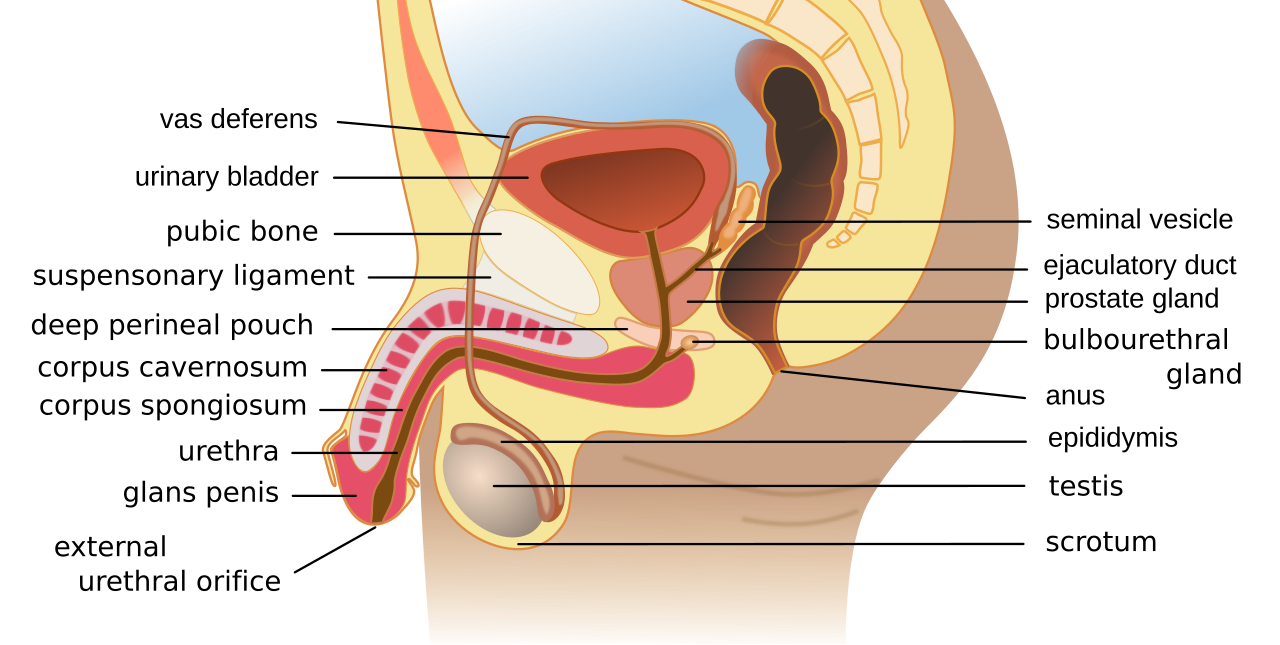
The human male reproductive system: sperm formed in the testis mature in the epididymis and travel via the vas deferens, mixing with secretions of the seminal vesicle, prostate and bulbourethral glands. Image: Wumingbai, CC BY-SA 4.0, via Wikimedia Commons.
Concept context
Male and female reproductive systems, gametogenesis, fertilization, implantation, pregnancy, and reproductive health.