Answer: Stimulates spermatogenesis, development of secondary sex characteristics (facial hair, deep voice, muscle mass), and maintains male reproductive organs.
- A Produces mature sperm cells largely by itself, without requiring much other supporting hormonal signaling as frequently observed in practice in many documented cases
- B Stimulates spermatogenesis, development of secondary sex characteristics (facial hair, deep voice, muscle mass), and maintains male reproductive organs
- C Controls the release of FSH mainly from specialized neurosecretory cells located within the hypothalamus region according to conventional understanding
- D Is produced mainly within the adrenal cortex gland rather than within the testes themselves under most circumstances in routine practice overall in most cases
Correct answer: B. Stimulates spermatogenesis, development of secondary sex characteristics (facial hair, deep voice, muscle mass), and maintains male reproductive organs
Explanation: Testosterone (produced by Leydig cells in testes, stimulated by LH): (1) Required for spermatogenesis; (2) Develops and maintains male secondary sex characteristics during puberty; (3) Maintains libido; (4) Anabolic effects (muscle, bone). Testosterone is regulated by hypothalamus-pituitary-testis axis (GnRH-LH axis).
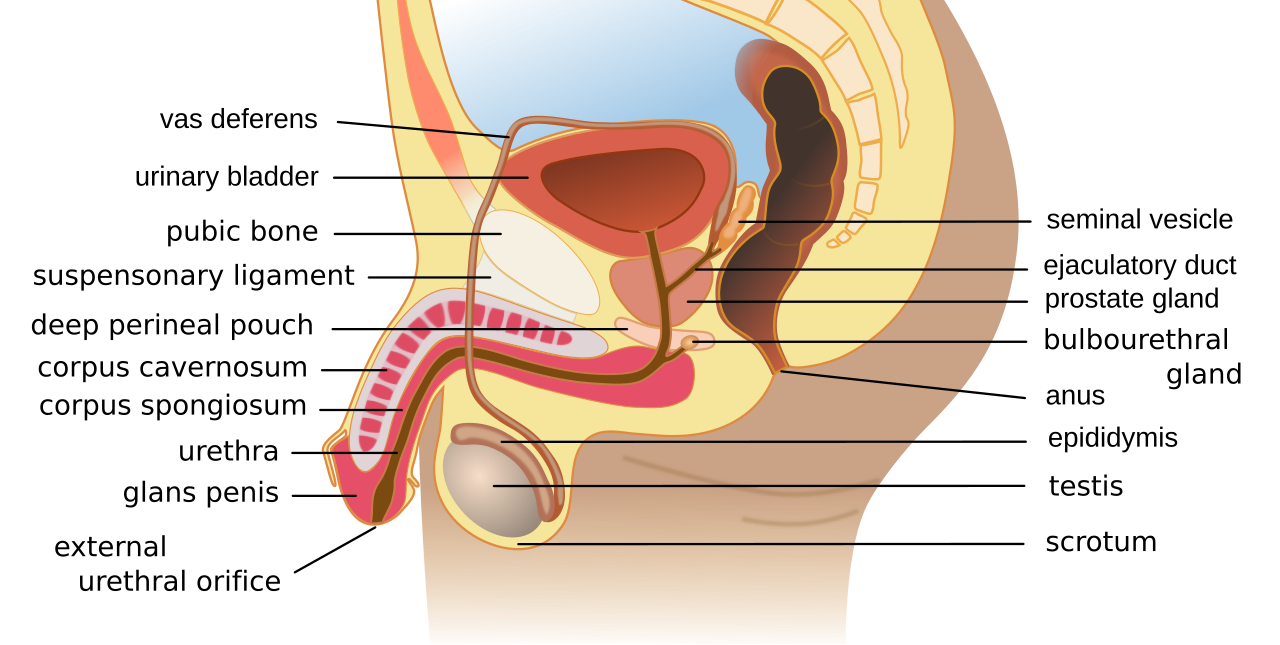
The human male reproductive system: sperm formed in the testis mature in the epididymis and travel via the vas deferens, mixing with secretions of the seminal vesicle, prostate and bulbourethral glands. Image: Wumingbai, CC BY-SA 4.0, via Wikimedia Commons.
Concept context
Male and female reproductive systems, gametogenesis, fertilization, implantation, pregnancy, and reproductive health.