Answer: Oxytocin causes uterine contractions during labor (positive feedback loop) and milk ejection (let-down reflex) during breastfeeding.
- A Oxytocin mainly regulates water balance through its action on the kidney collecting ducts as frequently described in most textbook accounts
- B Oxytocin causes uterine contractions during labor (positive feedback loop) and milk ejection (let-down reflex) during breastfeeding
- C Oxytocin is sometimes mistakenly thought to suppress uterine contractions throughout the process of labor during normal conditions
- D Oxytocin directly synthesizes milk proteins within the mammary alveolar cells, according to some misconceptions as generally observed
Correct answer: B. Oxytocin causes uterine contractions during labor (positive feedback loop) and milk ejection (let-down reflex) during breastfeeding
Explanation: Oxytocin (from posterior pituitary): triggers uterine contractions during labor in a positive feedback loop (contractions stimulate more oxytocin release). During breastfeeding, infant suckling triggers oxytocin release causing milk ejection (let-down reflex). Synthetic oxytocin (Pitocin) is used to induce labor.
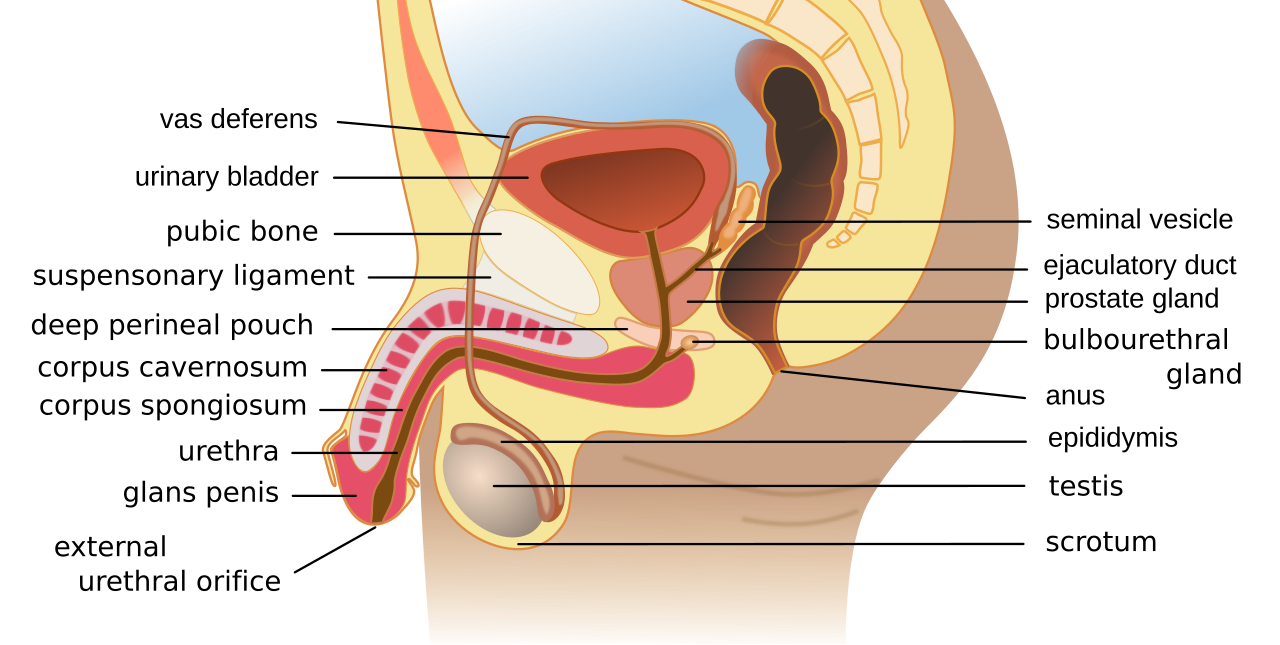
The human male reproductive system: sperm formed in the testis mature in the epididymis and travel via the vas deferens, mixing with secretions of the seminal vesicle, prostate and bulbourethral glands. Image: Wumingbai, CC BY-SA 4.0, via Wikimedia Commons.
Concept context
Male and female reproductive systems, gametogenesis, fertilization, implantation, pregnancy, and reproductive health.