Answer: Post-ovulation phase (days 15-28) when corpus luteum secretes progesterone; if no fertilization, corpus luteum degenerates, progesterone falls, endometrium sheds (menstruation).
- A The phase occurring well before ovulation even takes place, while the single dominant follicle is still developing under FSH according to conventional understanding in routine practice
- B Post-ovulation phase (days 15-28) when corpus luteum secretes progesterone; if no fertilization, corpus luteum degenerates, progesterone falls, endometrium sheds (menstruation)
- C The proliferative phase, during which steadily rising estrogen levels gradually rebuild the endometrial lining tissue each cycle overall in most cases under typical conditions
- D The phase in which the primary oocyte undergoes its final stage of nuclear maturation, completing meiosis mainly at fertilization according to standard textbooks in general practice
Correct answer: B. Post-ovulation phase (days 15-28) when corpus luteum secretes progesterone; if no fertilization, corpus luteum degenerates, progesterone falls, endometrium sheds (menstruation)
Explanation: Luteal phase (days 15-28): LH maintains corpus luteum which secretes progesterone (and estrogen). Progesterone maintains secretory endometrium. If no pregnancy: corpus luteum degenerates (luteolysis), P4 and E2 fall, endometrium is shed = menstruation, and next cycle begins.
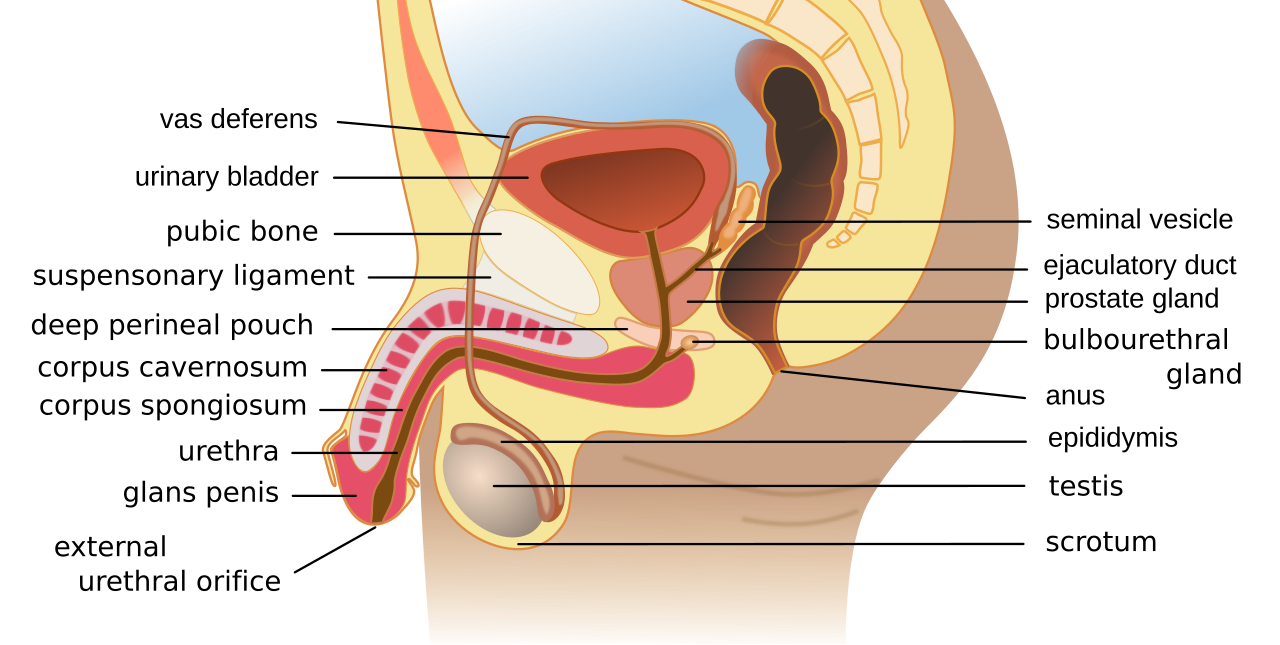
The human male reproductive system: sperm formed in the testis mature in the epididymis and travel via the vas deferens, mixing with secretions of the seminal vesicle, prostate and bulbourethral glands. Image: Wumingbai, CC BY-SA 4.0, via Wikimedia Commons.
Concept context
Male and female reproductive systems, gametogenesis, fertilization, implantation, pregnancy, and reproductive health.