Answer: Exchange of nutrients, oxygen, and waste between mother and fetus.
- A Produces sperm cells used during the process of fertilization itself
- B Exchange of nutrients, oxygen, and waste between mother and fetus
- C Stores all of a female's immature eggs until ovulation eventually occurs each month
- D Produces milk after childbirth from cells within the mammary alveoli
Correct answer: B. Exchange of nutrients, oxygen, and waste between mother and fetus
Explanation: The placenta is the organ that connects mother and fetus. It exchanges nutrients, O<sub>2</sub>, and waste between maternal and fetal blood. It also produces hormones (hCG, progesterone, estrogen) to maintain pregnancy.
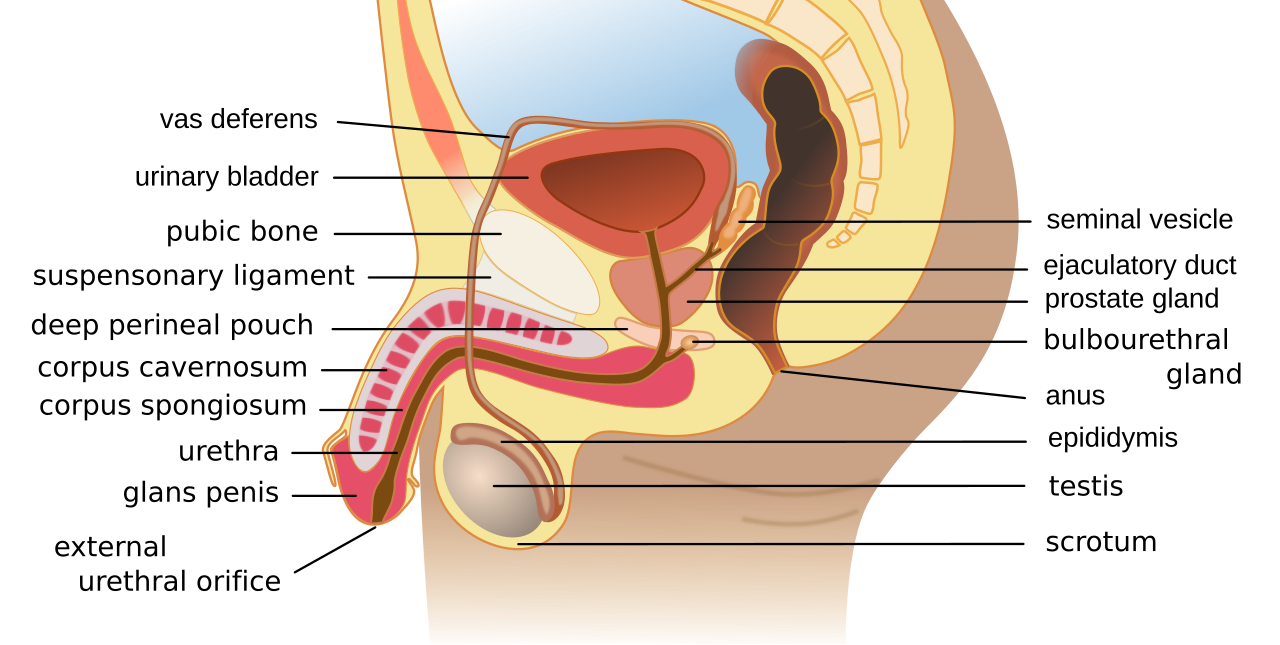
The human male reproductive system: sperm formed in the testis mature in the epididymis and travel via the vas deferens, mixing with secretions of the seminal vesicle, prostate and bulbourethral glands. Image: Wumingbai, CC BY-SA 4.0, via Wikimedia Commons.
Concept context
Male and female reproductive systems, gametogenesis, fertilization, implantation, pregnancy, and reproductive health.