Answer: Produces progesterone and estrogen to maintain uterine lining after ovulation.
- A Produces sperm cells continuously within the seminiferous tubules of the testes
- B Produces progesterone and estrogen to maintain uterine lining after ovulation
- C Stores all unfertilized eggs within the outer cortex of the ovary indefinitely
- D Releases FSH directly from specialized cells of the anterior pituitary gland
Correct answer: B. Produces progesterone and estrogen to maintain uterine lining after ovulation
Explanation: The corpus luteum forms from the ruptured follicle after ovulation. It produces progesterone (mainly) and estrogen that maintain the thickened endometrium, ready for implantation. If pregnancy does not occur, it degenerates after ~14 days.
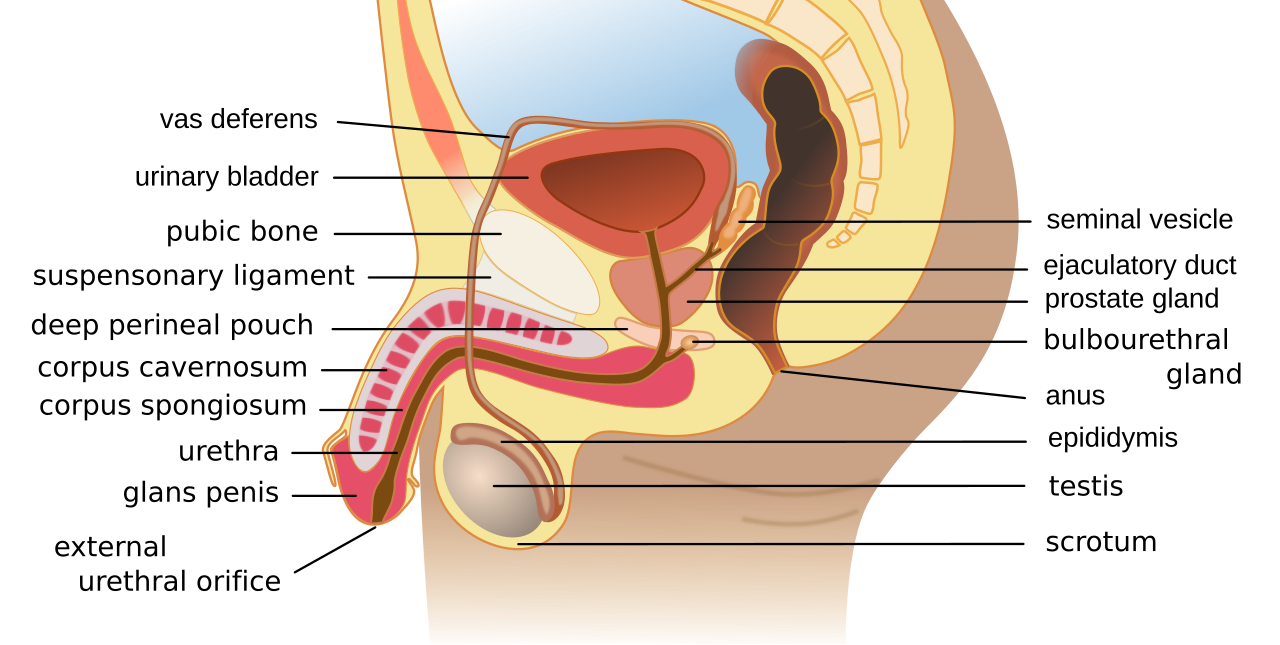
The human male reproductive system: sperm formed in the testis mature in the epididymis and travel via the vas deferens, mixing with secretions of the seminal vesicle, prostate and bulbourethral glands. Image: Wumingbai, CC BY-SA 4.0, via Wikimedia Commons.
Concept context
Male and female reproductive systems, gametogenesis, fertilization, implantation, pregnancy, and reproductive health.