Answer: Primary oocyte (diploid, 2n) is arrested in prophase I; at ovulation it completes meiosis I to become secondary oocyte (haploid, n, with first polar body); meiosis II completes only if fertilization occurs.
- A Both stages represent cytologically and genetically largely similar phases of the overall oocyte maturation process occurring throughout development from infancy in typical laboratory settings under usual circumstances
- B Primary oocyte (diploid, 2n) is arrested in prophase I; at ovulation it completes meiosis I to become secondary oocyte (haploid, n, with first polar body); meiosis II completes only if fertilization occurs
- C The secondary oocyte form is sometimes mistakenly described as the developmental stage released from the ovary at birth rather than at puberty according to most researchers in the majority of cases studied
- D The primary oocyte is sometimes thought to finish most of meiosis well before ovulation takes place during the cycle, completing it in the fetus as widely reported in standard practice under most conditions encountered
Correct answer: B. Primary oocyte (diploid, 2n) is arrested in prophase I; at ovulation it completes meiosis I to become secondary oocyte (haploid, n, with first polar body); meiosis II completes only if fertilization occurs
Explanation: Primary oocyte (2n): formed in fetal life, arrested in prophase I of meiosis I. At ovulation, it completes meiosis I, becoming a secondary oocyte (n) + first polar body. The secondary oocyte arrests in metaphase II. Meiosis II completes only after sperm penetration, producing the ovum + second polar body.
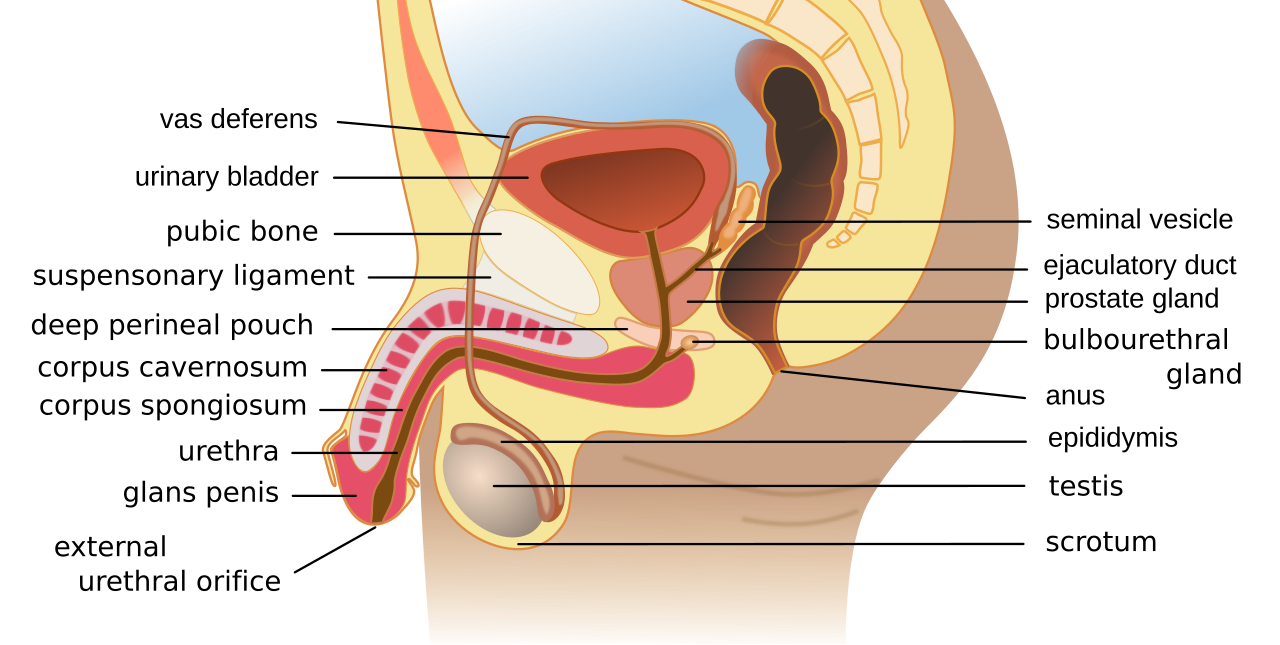
The human male reproductive system: sperm formed in the testis mature in the epididymis and travel via the vas deferens, mixing with secretions of the seminal vesicle, prostate and bulbourethral glands. Image: Wumingbai, CC BY-SA 4.0, via Wikimedia Commons.
Concept context
Male and female reproductive systems, gametogenesis, fertilization, implantation, pregnancy, and reproductive health.