Answer: FSH stimulates follicle growth and estrogen secretion in first half of cycle; LH surge triggers ovulation and then maintains corpus luteum.
- A Both hormones perform a largely similar regulatory role within the developing ovarian follicle in typical laboratory settings under usual circumstances
- B FSH stimulates follicle growth and estrogen secretion in first half of cycle; LH surge triggers ovulation and then maintains corpus luteum
- C LH instead stimulates the growth of the follicle, while FSH is the hormone that triggers ovulation according to most researchers in the majority of cases studied
- D FSH is sometimes thought to be secreted mainly within males, with females relying mainly on LH for cycle control as widely reported in standard practice
Correct answer: B. FSH stimulates follicle growth and estrogen secretion in first half of cycle; LH surge triggers ovulation and then maintains corpus luteum
Explanation: FSH (Follicle-Stimulating Hormone): stimulates growth of ovarian follicles and estrogen production in follicular phase. LH: mid-cycle surge (triggered by high estrogen) causes ovulation; LH then stimulates corpus luteum formation. Both are gonadotropins from anterior pituitary, regulated by GnRH from hypothalamus.
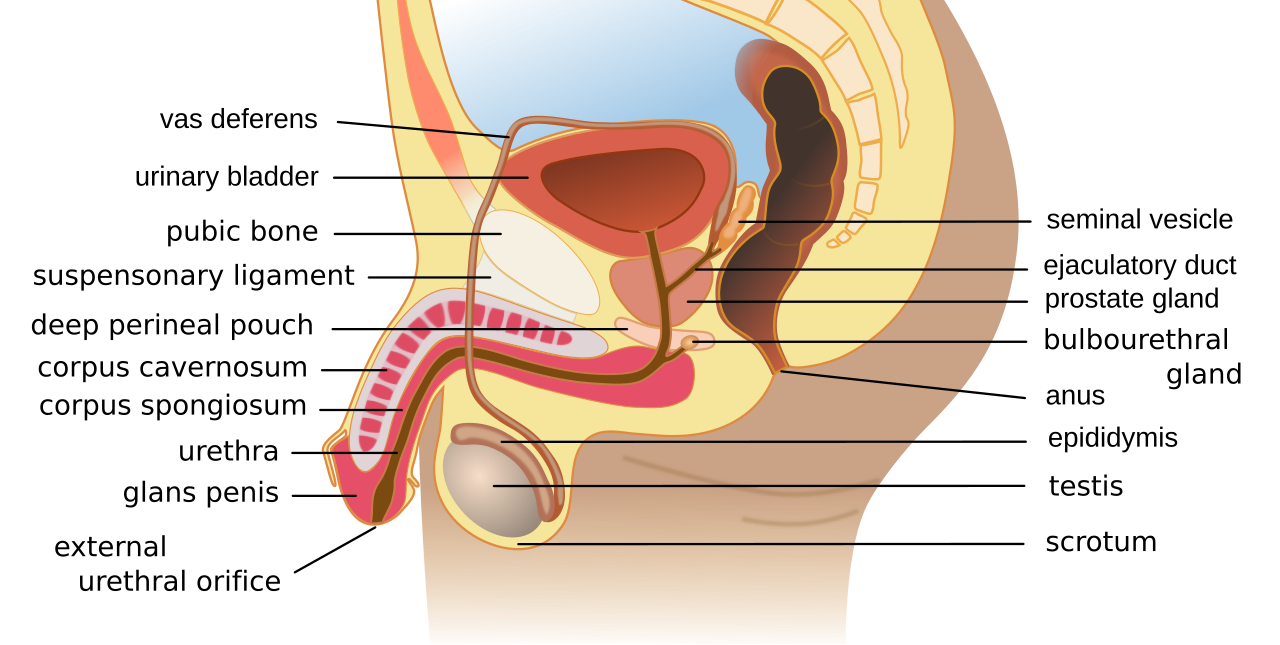
The human male reproductive system: sperm formed in the testis mature in the epididymis and travel via the vas deferens, mixing with secretions of the seminal vesicle, prostate and bulbourethral glands. Image: Wumingbai, CC BY-SA 4.0, via Wikimedia Commons.
Concept context
Male and female reproductive systems, gametogenesis, fertilization, implantation, pregnancy, and reproductive health.