Answer: Embryo: from fertilization to 8 weeks (organogenesis, primary tissue formation); fetus: from 9 weeks to birth (growth and maturation of formed organs).
- A Both terms are sometimes thought to refer to exactly the same developmental stage and are generally used interchangeably by most clinicians today
- B Embryo: from fertilization to 8 weeks (organogenesis, primary tissue formation); fetus: from 9 weeks to birth (growth and maturation of formed organs)
- C The fetal stage is sometimes thought to occur chronologically before the embryonic stage in the overall sequence of human development in general practice
- D The embryonic stage is sometimes thought to begin mainly after the third month of gestation has already largely passed by that point as frequently described
Correct answer: B. Embryo: from fertilization to 8 weeks (organogenesis, primary tissue formation); fetus: from 9 weeks to birth (growth and maturation of formed organs)
Explanation: Embryonic period (weeks 1-8): fertilization, cleavage, implantation, gastrulation, organogenesis. All major organs form. Most critical for teratogen exposure. Fetal period (weeks 9-birth): rapid growth, maturation, functional development. Brain undergoes extensive growth. At 24 weeks, viability threshold; lungs surfactant production begins.
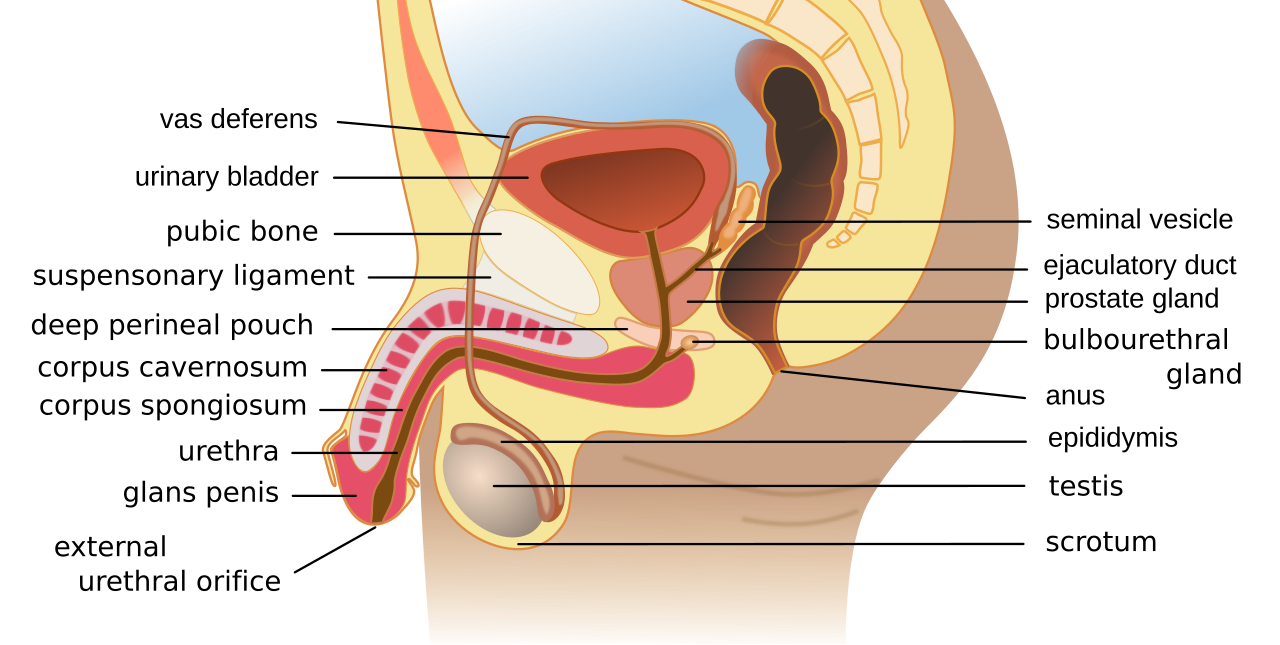
The human male reproductive system: sperm formed in the testis mature in the epididymis and travel via the vas deferens, mixing with secretions of the seminal vesicle, prostate and bulbourethral glands. Image: Wumingbai, CC BY-SA 4.0, via Wikimedia Commons.
Concept context
Male and female reproductive systems, gametogenesis, fertilization, implantation, pregnancy, and reproductive health.