Answer: Sperm production in the seminiferous tubules of the testes; involves mitosis of spermatogonia then meiosis to produce spermatocytes then spermatids then mature sperm.
- A Egg production occurring mainly within the developing follicles located deep inside the ovary, under FSH and LH control under usual circumstances according to most researchers
- B Sperm production in the seminiferous tubules of the testes; involves mitosis of spermatogonia then meiosis to produce spermatocytes then spermatids then mature sperm
- C Production of the hormone testosterone by the interstitial Leydig cells found scattered throughout testis tissue, stimulated by LH in the majority of cases studied
- D Sperm storage and the final stage of maturation occurring within the long, tightly coiled epididymis tube over roughly three weeks as widely reported in standard practice
Correct answer: B. Sperm production in the seminiferous tubules of the testes; involves mitosis of spermatogonia then meiosis to produce spermatocytes then spermatids then mature sperm
Explanation: Spermatogenesis: spermatogonia (2n) divide by mitosis, then primary spermatocytes undergo meiosis I to give secondary spermatocytes, then meiosis II gives spermatids. Spermatids undergo spermiogenesis (morphological transformation) to become sperm. Sertoli cells support this process.
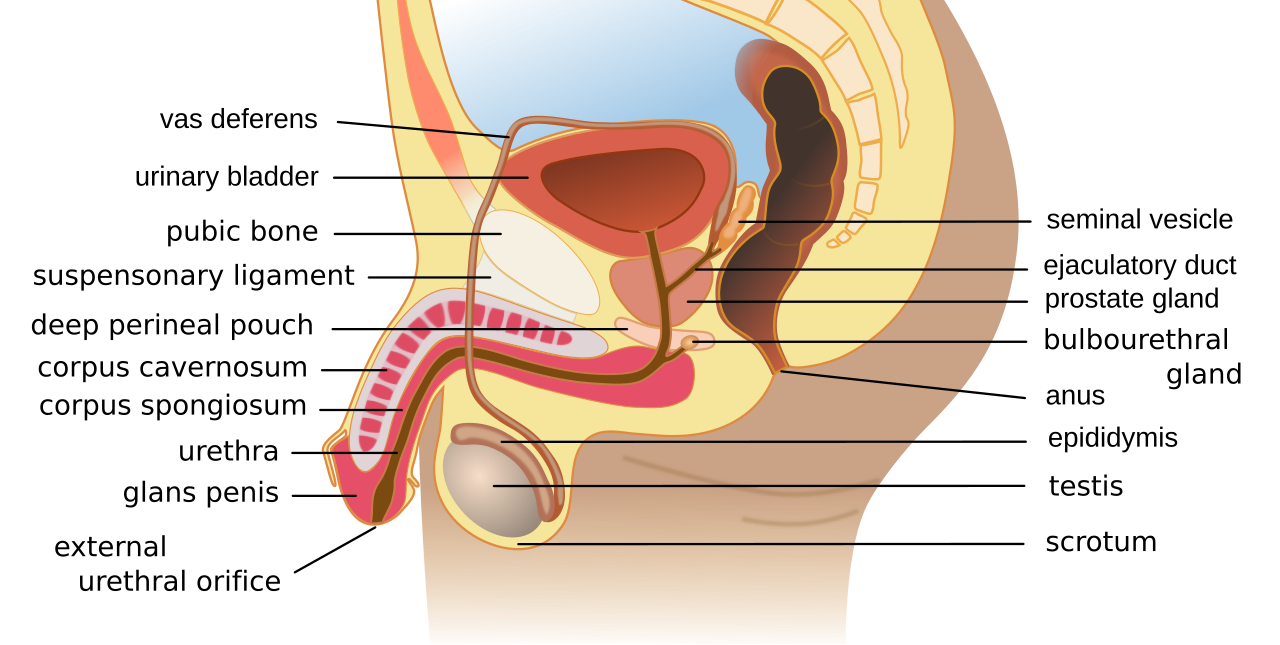
The human male reproductive system: sperm formed in the testis mature in the epididymis and travel via the vas deferens, mixing with secretions of the seminal vesicle, prostate and bulbourethral glands. Image: Wumingbai, CC BY-SA 4.0, via Wikimedia Commons.
Concept context
Male and female reproductive systems, gametogenesis, fertilization, implantation, pregnancy, and reproductive health.