Answer: A serious pregnancy complication: high blood pressure + proteinuria after 20 weeks; caused by abnormal placentation with poor trophoblast invasion and inadequate spiral artery remodeling, causing placental ischemia.
- A A minor and largely inconsequential hormonal imbalance that typically resolves on its own without requiring much medical treatment in most cases as generally observed in typical laboratory settings under usual circumstances
- B A serious pregnancy complication: high blood pressure + proteinuria after 20 weeks; caused by abnormal placentation with poor trophoblast invasion and inadequate spiral artery remodeling, causing placental ischemia
- C Nausea that is confined mainly to the first trimester period of pregnancy, with few symptoms occurring afterward in most documented cases according to most researchers in the majority of cases studied as widely reported
- D A specific type of sexually transmitted infection that mainly affects women during the course of pregnancy specifically, according to some misconceptions in standard practice under most conditions encountered
Correct answer: B. A serious pregnancy complication: high blood pressure + proteinuria after 20 weeks; caused by abnormal placentation with poor trophoblast invasion and inadequate spiral artery remodeling, causing placental ischemia
Explanation: Pre-eclampsia: HTN + proteinuria after 20 weeks. Pathophysiology: defective trophoblast invasion fails to remodel uterine spiral arteries → shallow placentation → placental ischemia → release of anti-angiogenic factors (sFlt-1, sEng) → systemic endothelial dysfunction → hypertension, proteinuria, organ damage. Can progress to eclampsia (seizures). Only cure is delivery.
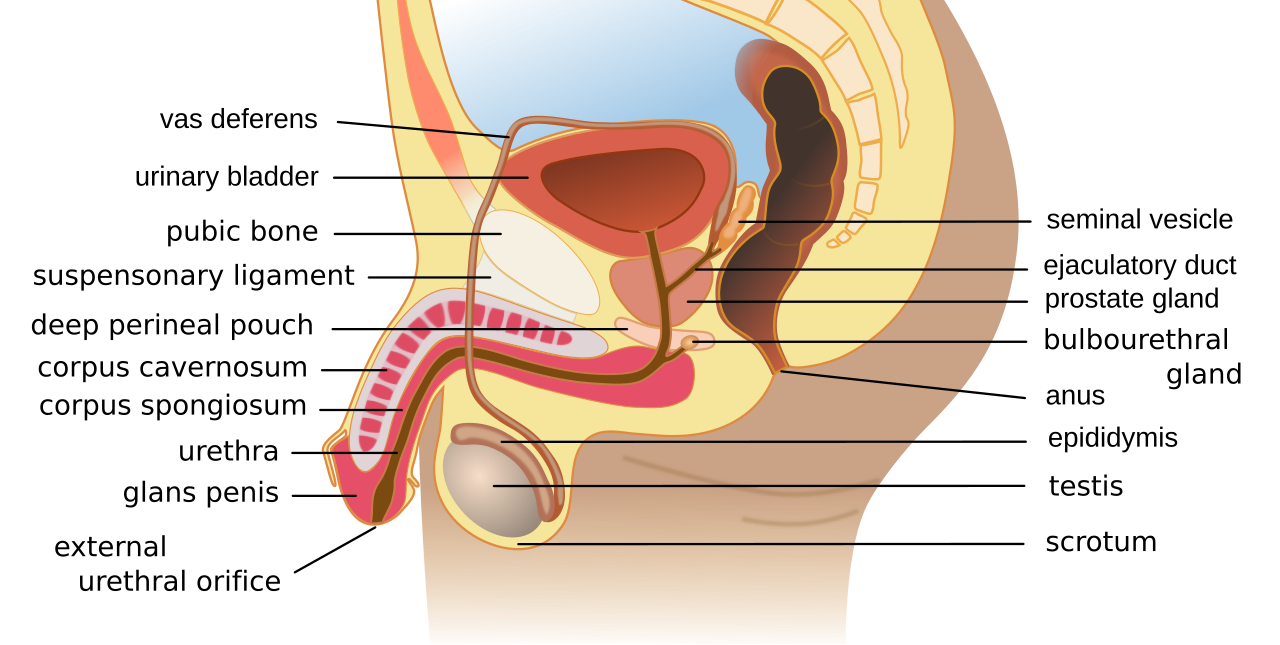
The human male reproductive system: sperm formed in the testis mature in the epididymis and travel via the vas deferens, mixing with secretions of the seminal vesicle, prostate and bulbourethral glands. Image: Wumingbai, CC BY-SA 4.0, via Wikimedia Commons.
Concept context
Male and female reproductive systems, gametogenesis, fertilization, implantation, pregnancy, and reproductive health.