Answer: Process by which blastocyst embeds into the endometrium; occurs 6-7 days after fertilization.
- A The precise moment when sperm and egg first meet within the fallopian tube, before any division
- B Process by which blastocyst embeds into the endometrium; occurs 6-7 days after fertilization
- C The release of a fully mature egg from the ovarian follicle during ovulation, before fertilization
- D The final delivery of the baby occurring at the very end of the full gestation period
Correct answer: B. Process by which blastocyst embeds into the endometrium; occurs 6-7 days after fertilization
Explanation: Implantation: the blastocyst (64+ cells) hatches from the zona pellucida and embeds into the secretory endometrium (6-7 days post-fertilization). Trophoblast cells invade the endometrium and form the placenta. hCG is secreted immediately, detectable in blood/urine.
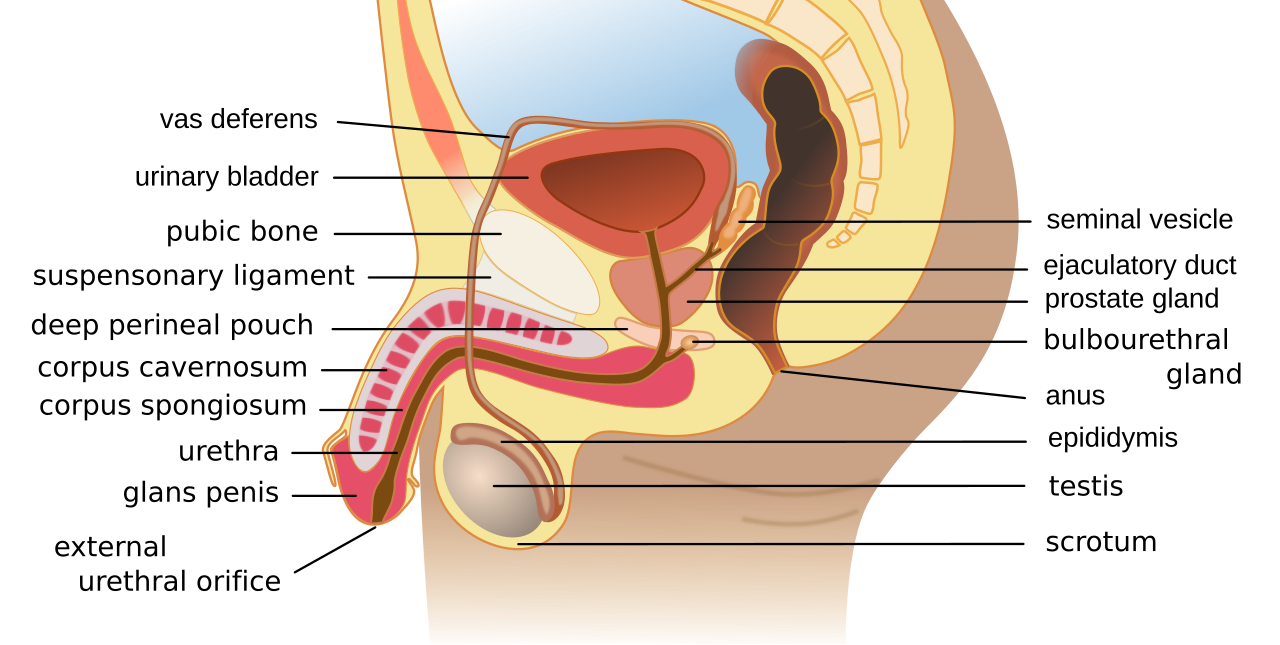
The human male reproductive system: sperm formed in the testis mature in the epididymis and travel via the vas deferens, mixing with secretions of the seminal vesicle, prostate and bulbourethral glands. Image: Wumingbai, CC BY-SA 4.0, via Wikimedia Commons.
Concept context
Male and female reproductive systems, gametogenesis, fertilization, implantation, pregnancy, and reproductive health.