Answer: Most early miscarriages (first trimester) are due to chromosomal abnormalities in the embryo; also maternal factors (uterine abnormalities, hormonal issues).
- A Excessively elevated levels of the hCG hormone secreted continuously by the developing trophoblast tissue layer according to conventional understanding
- B Most early miscarriages (first trimester) are due to chromosomal abnormalities in the embryo; also maternal factors (uterine abnormalities, hormonal issues)
- C Insufficient FSH secretion occurring mainly from the anterior pituitary gland of the mother herself in routine practice overall in most cases under typical conditions
- D Physical trauma occurring largely alone, with little contribution from any underlying genetic factor present according to standard textbooks in general practice
Correct answer: B. Most early miscarriages (first trimester) are due to chromosomal abnormalities in the embryo; also maternal factors (uterine abnormalities, hormonal issues)
Explanation: ~50-60% of spontaneous abortions occur due to chromosomal abnormalities in the embryo (mostly trisomies). Other causes: luteal phase deficiency (insufficient progesterone), uterine structural abnormalities, antiphospholipid syndrome, thyroid disorders, advanced maternal age.
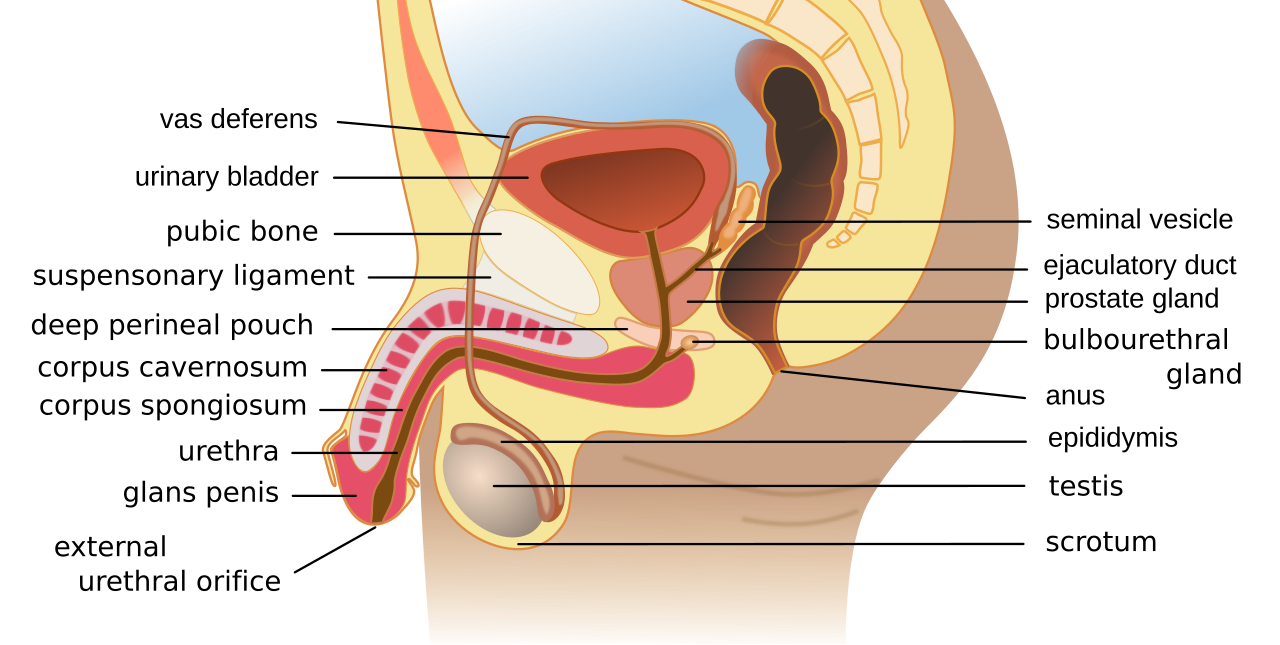
The human male reproductive system: sperm formed in the testis mature in the epididymis and travel via the vas deferens, mixing with secretions of the seminal vesicle, prostate and bulbourethral glands. Image: Wumingbai, CC BY-SA 4.0, via Wikimedia Commons.
Concept context
Male and female reproductive systems, gametogenesis, fertilization, implantation, pregnancy, and reproductive health.