Answer: Ectoderm (skin, nervous system), mesoderm (muscles, bones, circulatory), endoderm (gut lining, lungs, liver).
- A Ectoderm, endoderm, and mesoderm, all sometimes thought to derive mainly from the neural crest in typical laboratory settings
- B Ectoderm (skin, nervous system), mesoderm (muscles, bones, circulatory), endoderm (gut lining, lungs, liver)
- C Trophoblast, inner cell mass, and blastocoel, formed before implantation occurs under usual circumstances
- D Mainly two layers form initially - ectoderm and endoderm, with little mesoderm contribution according to most researchers
Correct answer: B. Ectoderm (skin, nervous system), mesoderm (muscles, bones, circulatory), endoderm (gut lining, lungs, liver)
Explanation: Gastrulation: ectoderm forms skin and entire nervous system; mesoderm forms muscles, bones, blood vessels, heart, kidneys, gonads; endoderm forms gut epithelium, liver, pancreas, lungs, thyroid. The development of all organs (organogenesis) follows from these three primary layers.
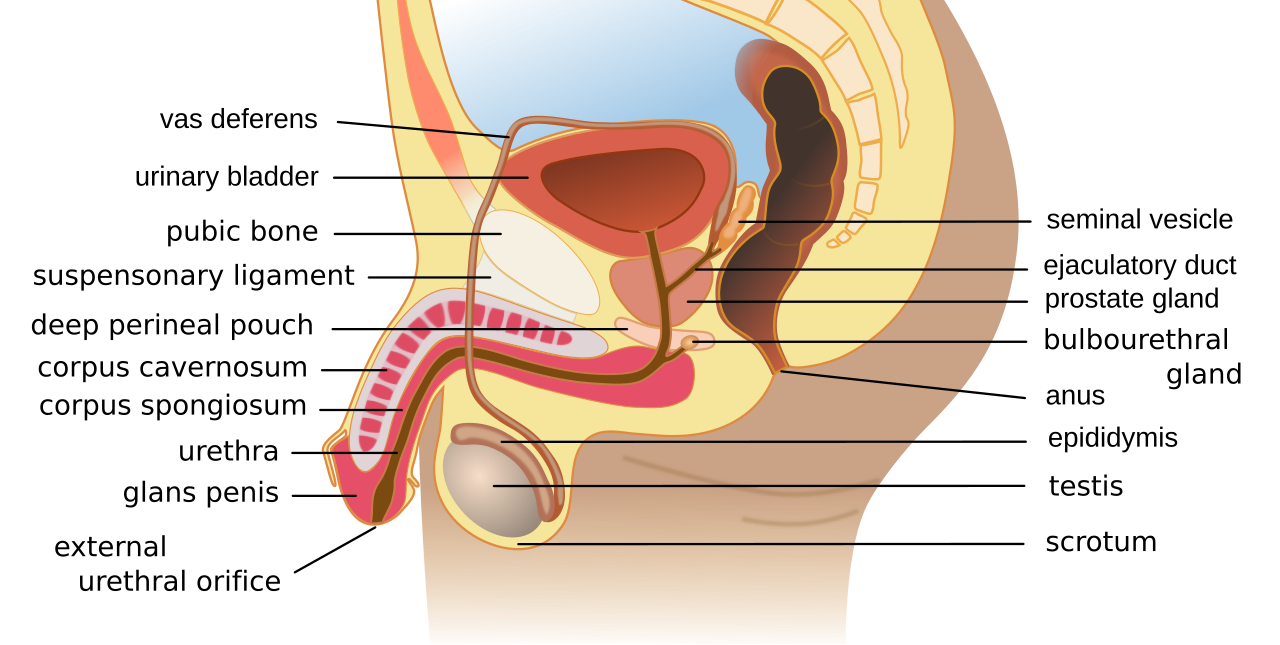
The human male reproductive system: sperm formed in the testis mature in the epididymis and travel via the vas deferens, mixing with secretions of the seminal vesicle, prostate and bulbourethral glands. Image: Wumingbai, CC BY-SA 4.0, via Wikimedia Commons.
Concept context
Male and female reproductive systems, gametogenesis, fertilization, implantation, pregnancy, and reproductive health.