Answer: Infections transmitted through sexual contact: HIV/AIDS (retrovirus), gonorrhoea (Neisseria), syphilis (Treponema), hepatitis B (virus), chlamydia (Chlamydia trachomatis).
- A Diseases that are transmitted mainly through the bite of an infected mosquito vector species, like malaria or dengue as frequently observed in practice in many documented cases
- B Infections transmitted through sexual contact: HIV/AIDS (retrovirus), gonorrhoea (Neisseria), syphilis (Treponema), hepatitis B (virus), chlamydia (Chlamydia trachomatis)
- C Mainly bacterial infections occur within this disease category, with few viral agents involved in transmission overall according to conventional understanding in routine practice
- D Mainly viral infections occur within this disease category, with few bacterial agents involved in transmission overall overall in most cases under typical conditions
Correct answer: B. Infections transmitted through sexual contact: HIV/AIDS (retrovirus), gonorrhoea (Neisseria), syphilis (Treponema), hepatitis B (virus), chlamydia (Chlamydia trachomatis)
Explanation: STIs are transmitted through sexual contact (vaginal, anal, oral). Key ones: HIV/AIDS (destroys CD4<sup>+</sup> T cells, no cure), gonorrhoea (Neisseria gonorrhoeae, bacterial), syphilis (Treponema pallidum, bacterial, 3 stages), hepatitis B (virus, can become chronic), chlamydia (most common bacterial STI globally).
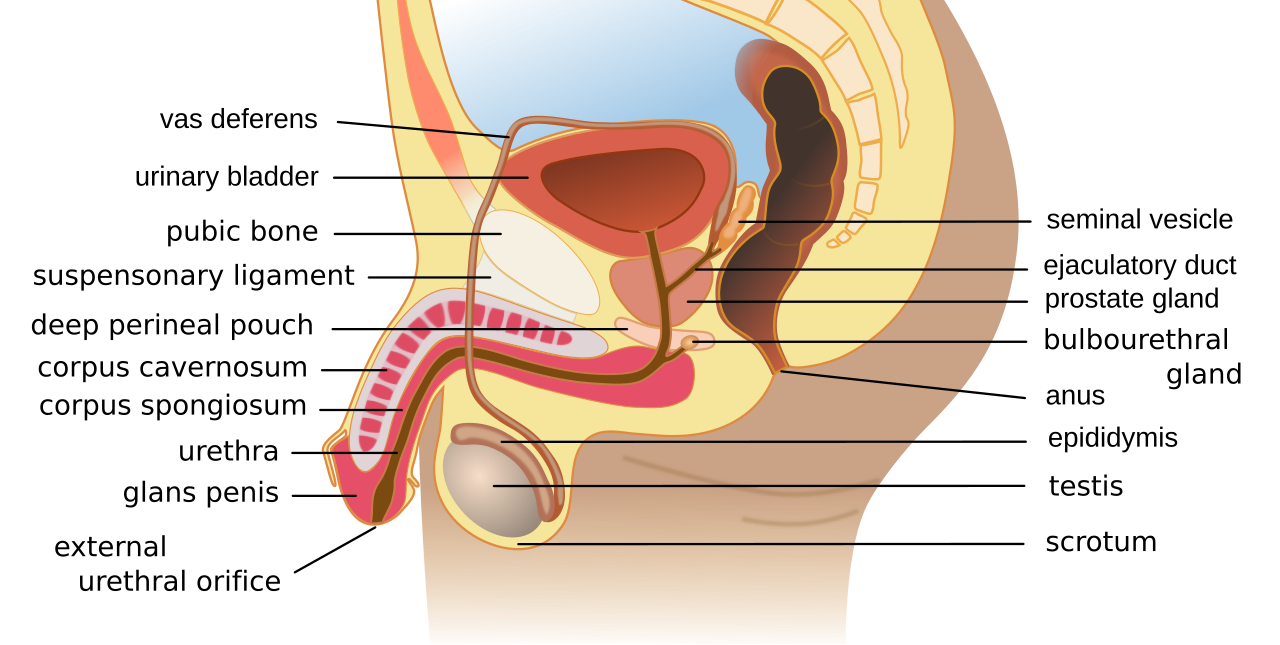
The human male reproductive system: sperm formed in the testis mature in the epididymis and travel via the vas deferens, mixing with secretions of the seminal vesicle, prostate and bulbourethral glands. Image: Wumingbai, CC BY-SA 4.0, via Wikimedia Commons.
Concept context
Male and female reproductive systems, gametogenesis, fertilization, implantation, pregnancy, and reproductive health.