Answer: Fertilization outside the body in a lab dish, then transfer of embryo to uterus.
- A Fertilization that occurs naturally and spontaneously inside the fallopian tube
- B Fertilization outside the body in a lab dish, then transfer of embryo to uterus
- C Injection of sperm directly into the uterine cavity using a thin catheter
- D Fertilization that uses eggs taken specifically from a donor rather than the patient
Correct answer: B. Fertilization outside the body in a lab dish, then transfer of embryo to uterus
Explanation: IVF (test-tube baby): eggs are retrieved from ovaries, fertilized with sperm in a lab dish (in vitro = in glass), cultured to blastocyst stage, then transferred to the uterus. First IVF baby: Louise Brown (1978, UK).
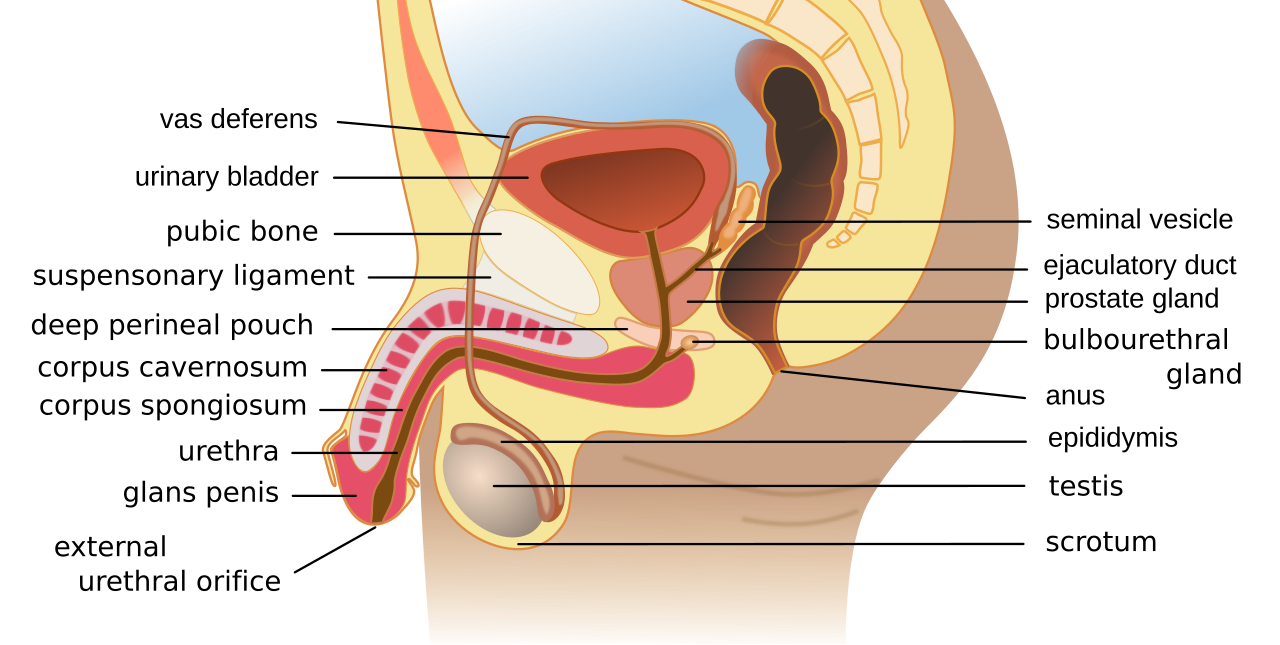
The human male reproductive system: sperm formed in the testis mature in the epididymis and travel via the vas deferens, mixing with secretions of the seminal vesicle, prostate and bulbourethral glands. Image: Wumingbai, CC BY-SA 4.0, via Wikimedia Commons.
Concept context
Male and female reproductive systems, gametogenesis, fertilization, implantation, pregnancy, and reproductive health.