Answer: hCG from trophoblast rescues the corpus luteum from degeneration, maintaining progesterone production; high progesterone maintains endometrium and suppresses FSH/LH, preventing follicle development and menstruation.
- A FSH hormone is sometimes thought to directly prevent menstruation by acting upon the cells of the endometrium itself each cycle in many documented cases according to conventional understanding in routine practice
- B hCG from trophoblast rescues the corpus luteum from degeneration, maintaining progesterone production; high progesterone maintains endometrium and suppresses FSH/LH, preventing follicle development and menstruation
- C LH alone is sometimes thought to prevent menstruation directly through its own dedicated hormone receptor located specifically on uterine endometrial cells overall in most cases under typical conditions according to standard textbooks
- D Estrogen alone, without much meaningful contribution from progesterone secretion, is sometimes thought to actually prevent menstruation from occurring in general practice as frequently described in most textbook accounts
Correct answer: B. hCG from trophoblast rescues the corpus luteum from degeneration, maintaining progesterone production; high progesterone maintains endometrium and suppresses FSH/LH, preventing follicle development and menstruation
Explanation: After implantation, trophoblast secretes hCG (structurally similar to LH) which binds LH receptors on corpus luteum, preventing luteolysis. Corpus luteum continues producing P4 and E2. At ~10 weeks, placenta takes over hormone production (luteal-placental shift). High P4 maintains endometrium, suppresses FSH/LH via negative feedback.
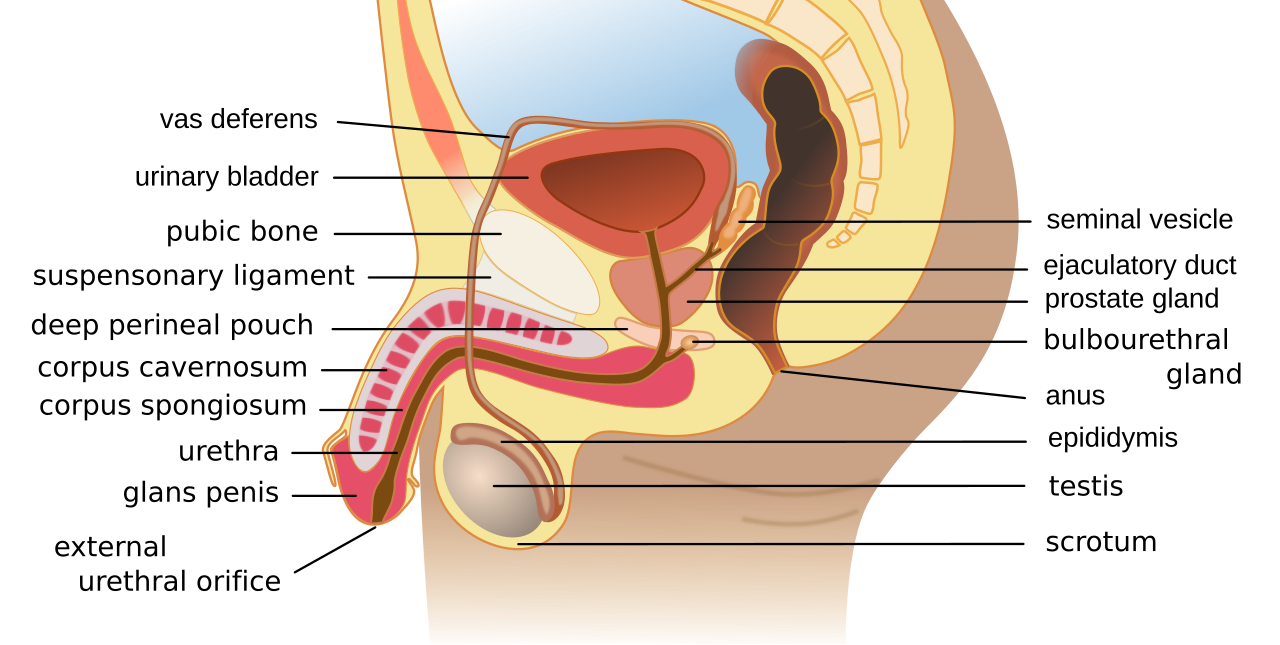
The human male reproductive system: sperm formed in the testis mature in the epididymis and travel via the vas deferens, mixing with secretions of the seminal vesicle, prostate and bulbourethral glands. Image: Wumingbai, CC BY-SA 4.0, via Wikimedia Commons.
Concept context
Male and female reproductive systems, gametogenesis, fertilization, implantation, pregnancy, and reproductive health.