Answer: 5 10 -6 T.
- A 2 × 10<sup>-5</sup> T
- B 1 × 10<sup>-5</sup> T
- C 2.5 × 10<sup>-6</sup> T
- D 5 × 10<sup>-6</sup> T
Correct answer: D. 5 × 10<sup>-6</sup> T
Explanation: B<sub>equatorial</sub> = (μ<sub>0</sub>/4π)(m/r<sup>3</sup>) = 10<sup>-7</sup> × 0.4/0.008 = 5 × 10<sup>-6</sup> T, exactly half the axial value.
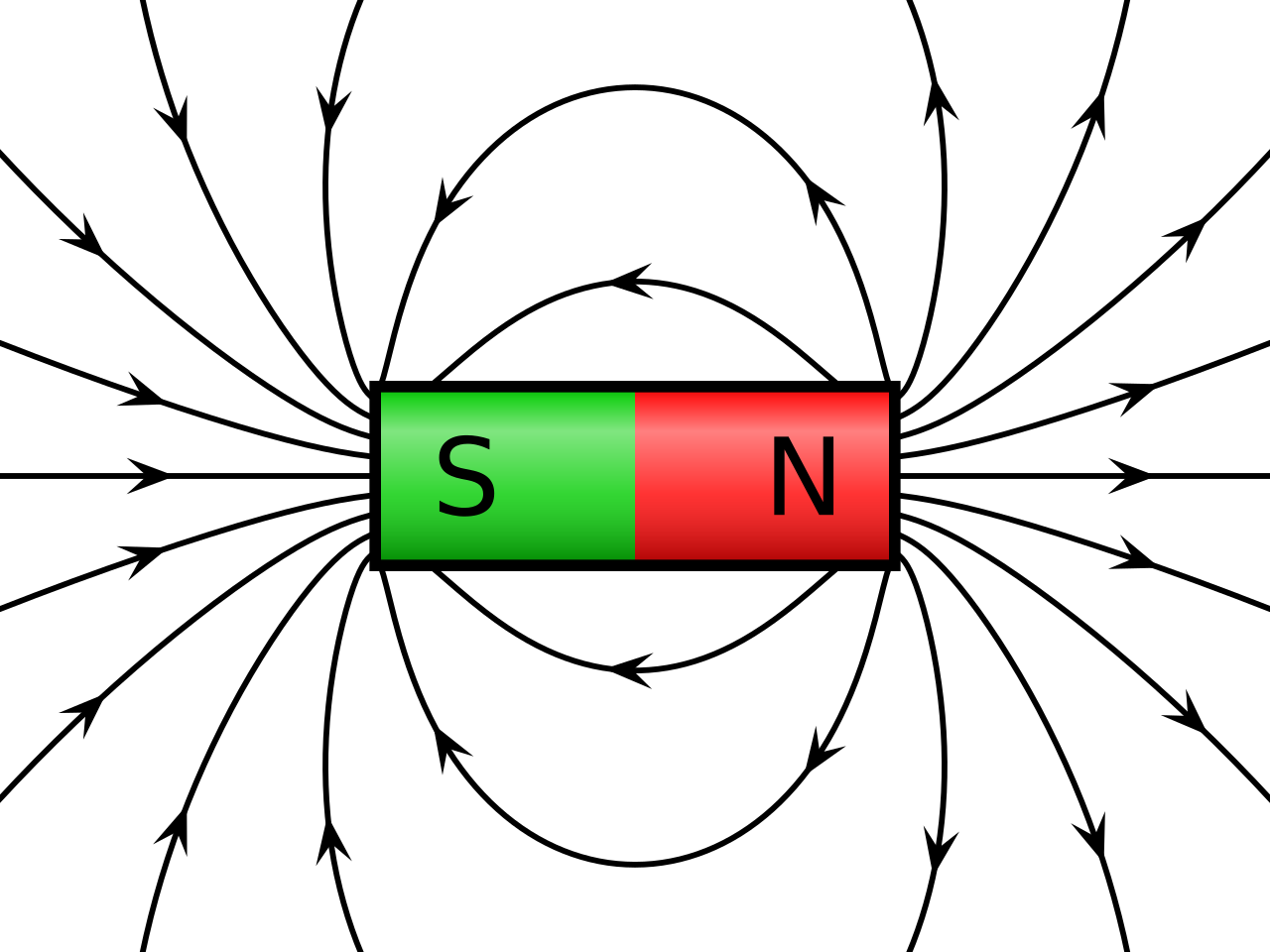
Magnetic field of a bar magnet: field lines emerge from the north pole and re-enter at the south pole outside the magnet, forming continuous closed loops. Image: Geek3, CC BY-SA 3.0, via Wikimedia Commons.
Concept context
Bar magnets, Earth's magnetism, and how different materials respond to an external magnetic field - diamagnetic, paramagnetic, and ferromagnetic behaviour.