Answer: SNARE proteins (synaptobrevin on vesicle, syntaxin and SNAP-25 on plasma membrane) forming a complex when Ca 2+ triggers synaptotagmin.
- A Calcium ions alone, requiring little additional dedicated protein fusion machinery at the presynaptic membrane region as frequently described
- B SNARE proteins (synaptobrevin on vesicle, syntaxin and SNAP-25 on plasma membrane) forming a complex when Ca<sup>2+</sup> triggers synaptotagmin
- C ATP hydrolysis alone, occurring largely independent of any incoming calcium signal at the synaptic terminal in most textbook accounts
- D Calmodulin protein acting largely alone, without much involvement of a SNARE protein complex at the membrane during normal conditions
Correct answer: B. SNARE proteins (synaptobrevin on vesicle, syntaxin and SNAP-25 on plasma membrane) forming a complex when Ca<sup>2+</sup> triggers synaptotagmin
Explanation: SNARE complex: v-SNARE (synaptobrevin/VAMP) on vesicle + t-SNAREs (syntaxin, SNAP-25) on plasma membrane zip together. Ca<sup>2+</sup> sensor synaptotagmin triggers membrane fusion and neurotransmitter release.
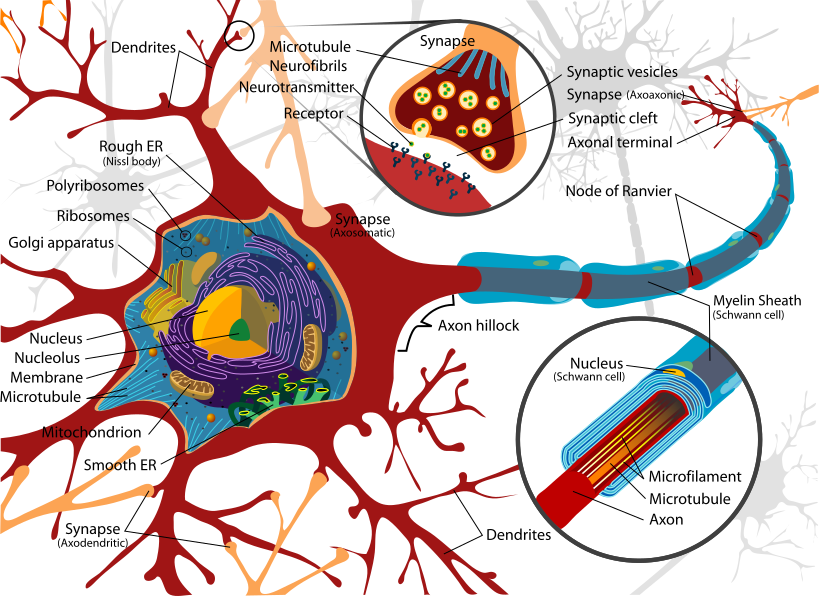
Structure of a neuron. Image: LadyofHats (Mariana Ruiz), Public Domain, via Wikimedia Commons.
Concept context
Brain, spinal cord, neurons, reflex arcs, and sense organs.