Answer: Na+ channels being inactivated (h gate closed) -- no matter how strong the stimulus, no action potential can be generated.
- A Potassium channels remaining continuously open, thereby preventing any further membrane depolarization event under most conditions encountered
- B Na+ channels being inactivated (h gate closed) -- no matter how strong the stimulus, no action potential can be generated
- C Continuous chloride efflux that hyperpolarizes the neuronal membrane indefinitely without any recovery period as frequently observed in practice
- D A temporary, complete absence of ATP needed to power the sodium-potassium exchange pump mechanism in many documented cases
Correct answer: B. Na+ channels being inactivated (h gate closed) -- no matter how strong the stimulus, no action potential can be generated
Explanation: Absolute refractory period: Na+ channels are in the inactivated state (voltage-dependent inactivation -- h gate closed). A new action potential is impossible regardless of stimulus strength.
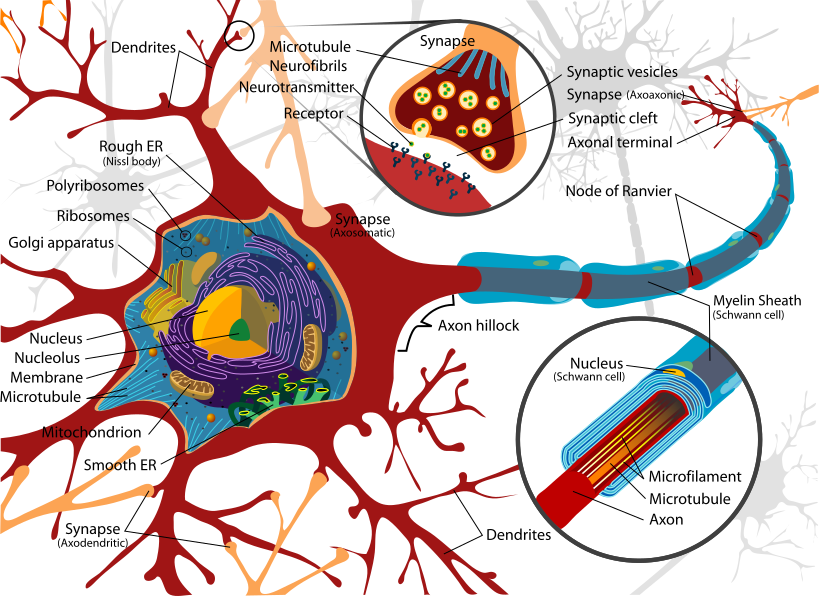
Structure of a neuron. Image: LadyofHats (Mariana Ruiz), Public Domain, via Wikimedia Commons.
Concept context
Brain, spinal cord, neurons, reflex arcs, and sense organs.