Answer: Specifically blocking voltage-gated Na+ channels from outside, preventing depolarization (used in research and is the puffer fish toxin).
- A Blocking voltage-gated K+ channels, thereby preventing normal repolarization of the cell membrane afterward as generally observed in typical laboratory settings
- B Specifically blocking voltage-gated Na+ channels from outside, preventing depolarization (used in research and is the puffer fish toxin)
- C Inhibiting voltage-gated Ca<sup>2+</sup> channels located at the presynaptic nerve terminal region specifically under usual circumstances according to most researchers
- D Blocking postsynaptic NMDA receptors, thereby preventing glutamate-induced membrane depolarization events in the majority of cases studied
Correct answer: B. Specifically blocking voltage-gated Na+ channels from outside, preventing depolarization (used in research and is the puffer fish toxin)
Explanation: TTX: binds voltage-gated Na+ channels externally, blocking the pore. Prevents Na+ influx and action potential generation. Used to identify Na+-channel-dependent conduction in research.
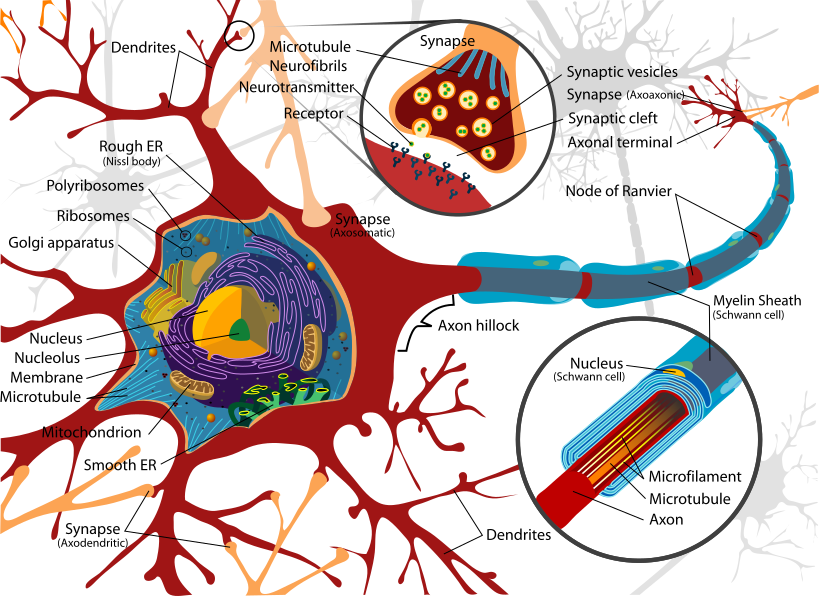
Structure of a neuron. Image: LadyofHats (Mariana Ruiz), Public Domain, via Wikimedia Commons.
Concept context
Brain, spinal cord, neurons, reflex arcs, and sense organs.