Answer: They require both ligand binding (glutamate) AND membrane depolarization to remove Mg 2+ block (coincidence detectors for LTP).
- A They respond mainly to GABA, the principal inhibitory neurotransmitter found within the central nervous system as generally observed
- B They require both ligand binding (glutamate) AND membrane depolarization to remove Mg<sup>2+</sup> block (coincidence detectors for LTP)
- C They are found mainly within the peripheral nervous system and rarely occur centrally in the brain in typical laboratory settings
- D They signal mainly through a slow G-protein coupled second-messenger cascade rather than a channel directly under usual circumstances
Correct answer: B. They require both ligand binding (glutamate) AND membrane depolarization to remove Mg<sup>2+</sup> block (coincidence detectors for LTP)
Explanation: NMDA receptors: dual-requirement channels. Both glutamate binding AND membrane depolarization needed. At rest, Mg<sup>2+</sup> blocks the channel. Depolarization removes Mg<sup>2+</sup>. This coincidence detection underlies LTP and memory.
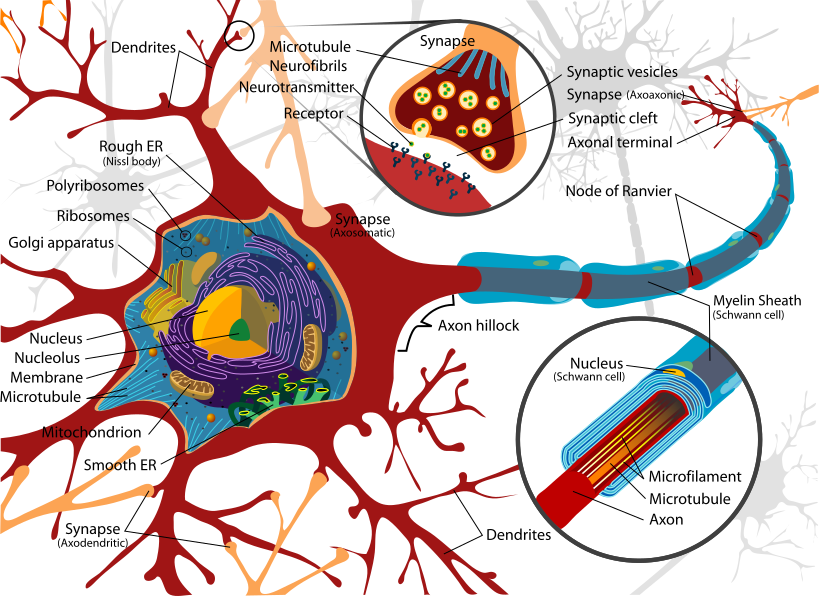
Structure of a neuron. Image: LadyofHats (Mariana Ruiz), Public Domain, via Wikimedia Commons.
Concept context
Brain, spinal cord, neurons, reflex arcs, and sense organs.