Answer: Loss of myelin sheath converts saltatory conduction to slow continuous conduction; threshold may not be reached at nodes.
- A It directly destroys the entire neuron cell body along with its nucleus and cellular organelles in routine practice
- B Loss of myelin sheath converts saltatory conduction to slow continuous conduction; threshold may not be reached at nodes
- C It pharmacologically blocks voltage-gated sodium channels distributed along the entire axon membrane overall in most cases
- D It substantially increases resting membrane permeability specifically to potassium ions present under typical conditions
Correct answer: B. Loss of myelin sheath converts saltatory conduction to slow continuous conduction; threshold may not be reached at nodes
Explanation: Myelin loss: action potential must continuously depolarize the axon membrane (continuous conduction) rather than jumping between nodes. Much slower, and in severe demyelination, signal can fail to propagate entirely.
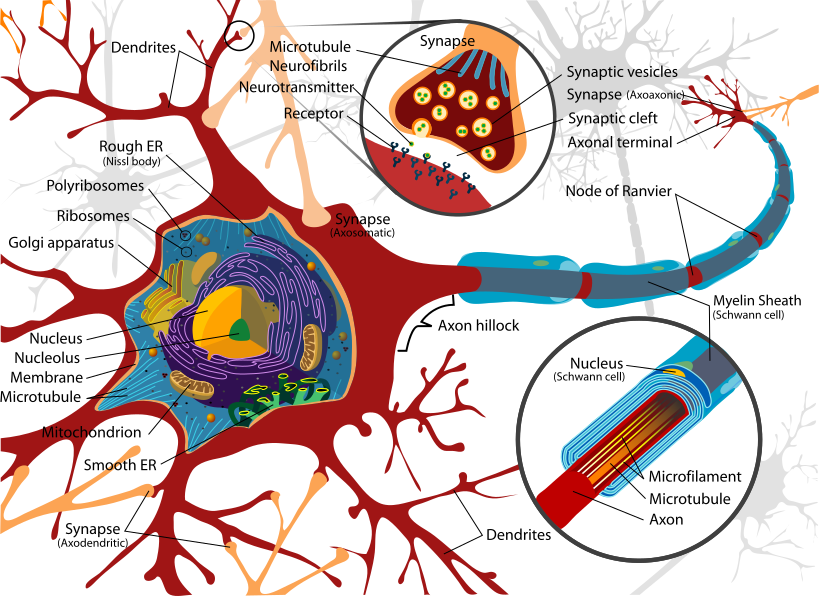
Structure of a neuron. Image: LadyofHats (Mariana Ruiz), Public Domain, via Wikimedia Commons.
Concept context
Brain, spinal cord, neurons, reflex arcs, and sense organs.