Answer: Bind to troponin, causing tropomyosin to move and expose actin binding sites for myosin.
- A Provide chemical energy by being hydrolyzed directly at the myosin head region overall
- B Bind to troponin, causing tropomyosin to move and expose actin binding sites for myosin
- C Transport oxygen from nearby capillaries directly into the muscle fibre tissue in most cases
- D Form the actual cross-bridge structure by binding directly to actin filaments under typical conditions
Correct answer: B. Bind to troponin, causing tropomyosin to move and expose actin binding sites for myosin
Explanation: Ca<sup>2+</sup> released from the sarcoplasmic reticulum binds to troponin C. This causes a conformational change that moves tropomyosin away from the myosin binding sites on actin, allowing cross-bridge formation and contraction.
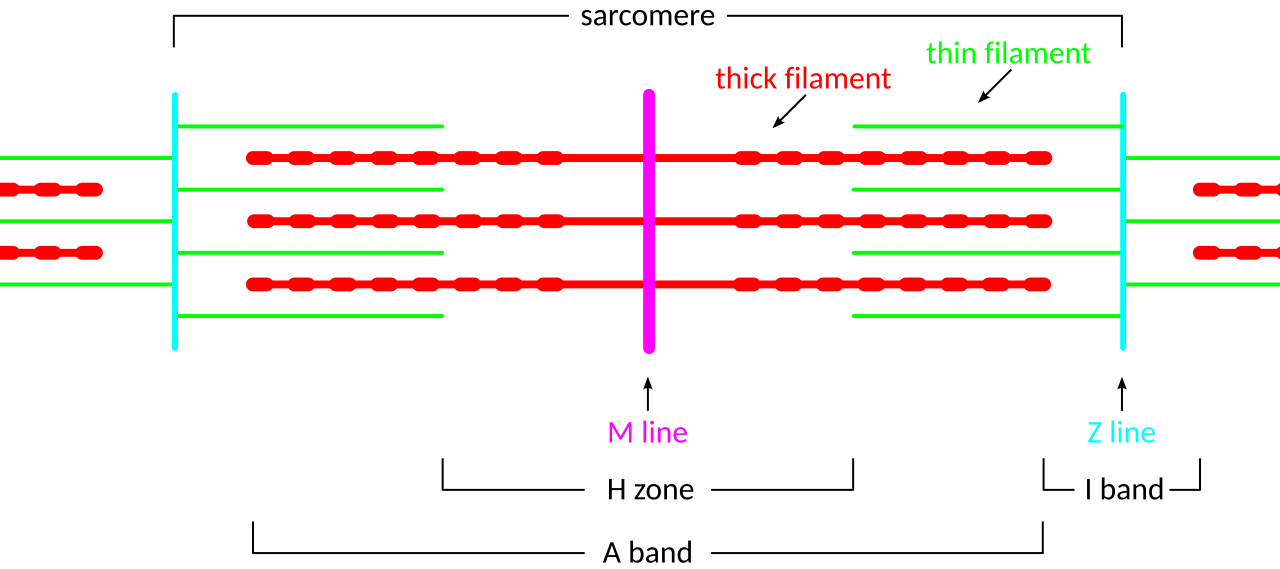
A sarcomere (Z line to Z line): during contraction the I band and H zone shorten as thin filaments slide over thick, while the A band stays the same length. Image: SlothMcCarty, CC BY-SA 3.0, via Wikimedia Commons.
Concept context
Types of movement, muscle contraction, skeletal system, joints, and disorders. Important for Class 11 and NEET.