Answer: Sustained involuntary muscle contractions/spasms caused by low blood calcium (hypocalcemia) affecting neuromuscular excitability.
- A A chronic degenerative type of arthritis that specifically affects the small joints of the hands and feet over years
- B Sustained involuntary muscle contractions/spasms caused by low blood calcium (hypocalcemia) affecting neuromuscular excitability
- C A particular form of paralysis caused by the gradual destruction of motor neuron cell bodies in the spinal cord
- D A progressive muscle-wasting disease that is specifically linked to a mutation in the dystrophin gene on the X chromosome
Correct answer: B. Sustained involuntary muscle contractions/spasms caused by low blood calcium (hypocalcemia) affecting neuromuscular excitability
Explanation: Tetany: involuntary, sustained muscle spasms due to hypocalcemia (low blood Ca<sup>2+</sup>). Low Ca<sup>2+</sup> increases membrane permeability to Na+, lowering threshold for action potentials → spontaneous firing → muscle spasm. Signs: Chvostek sign (tap facial nerve → facial twitch), Trousseau sign (BP cuff inflation → carpal spasm). Causes: hypoparathyroidism, vitamin D deficiency.
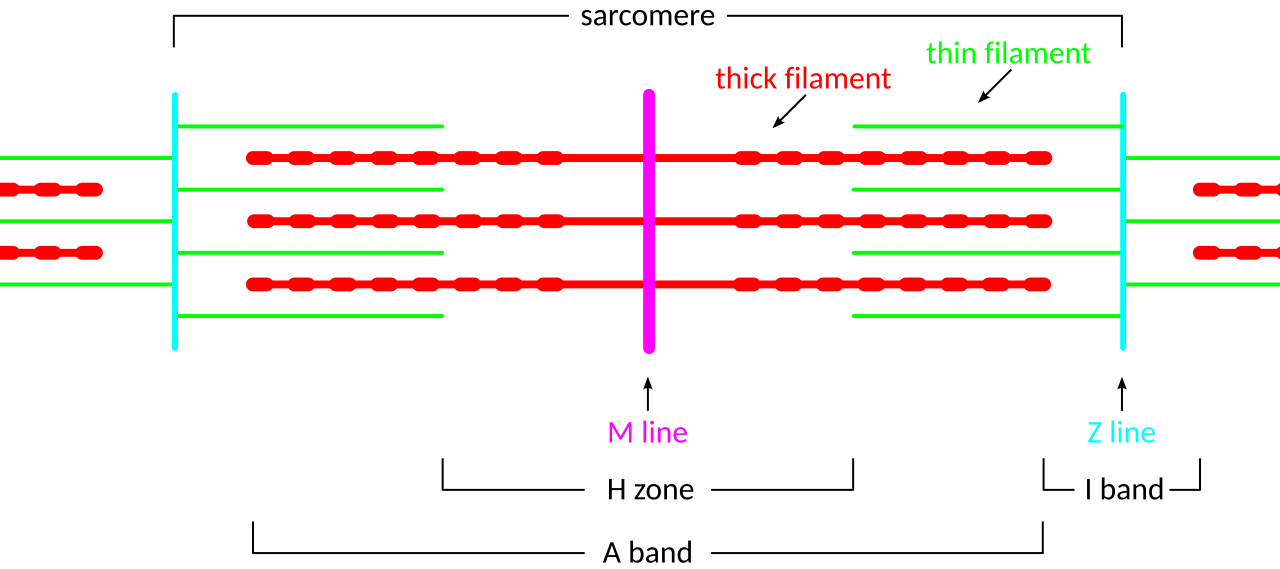
A sarcomere (Z line to Z line): during contraction the I band and H zone shorten as thin filaments slide over thick, while the A band stays the same length. Image: SlothMcCarty, CC BY-SA 3.0, via Wikimedia Commons.
Concept context
Types of movement, muscle contraction, skeletal system, joints, and disorders. Important for Class 11 and NEET.